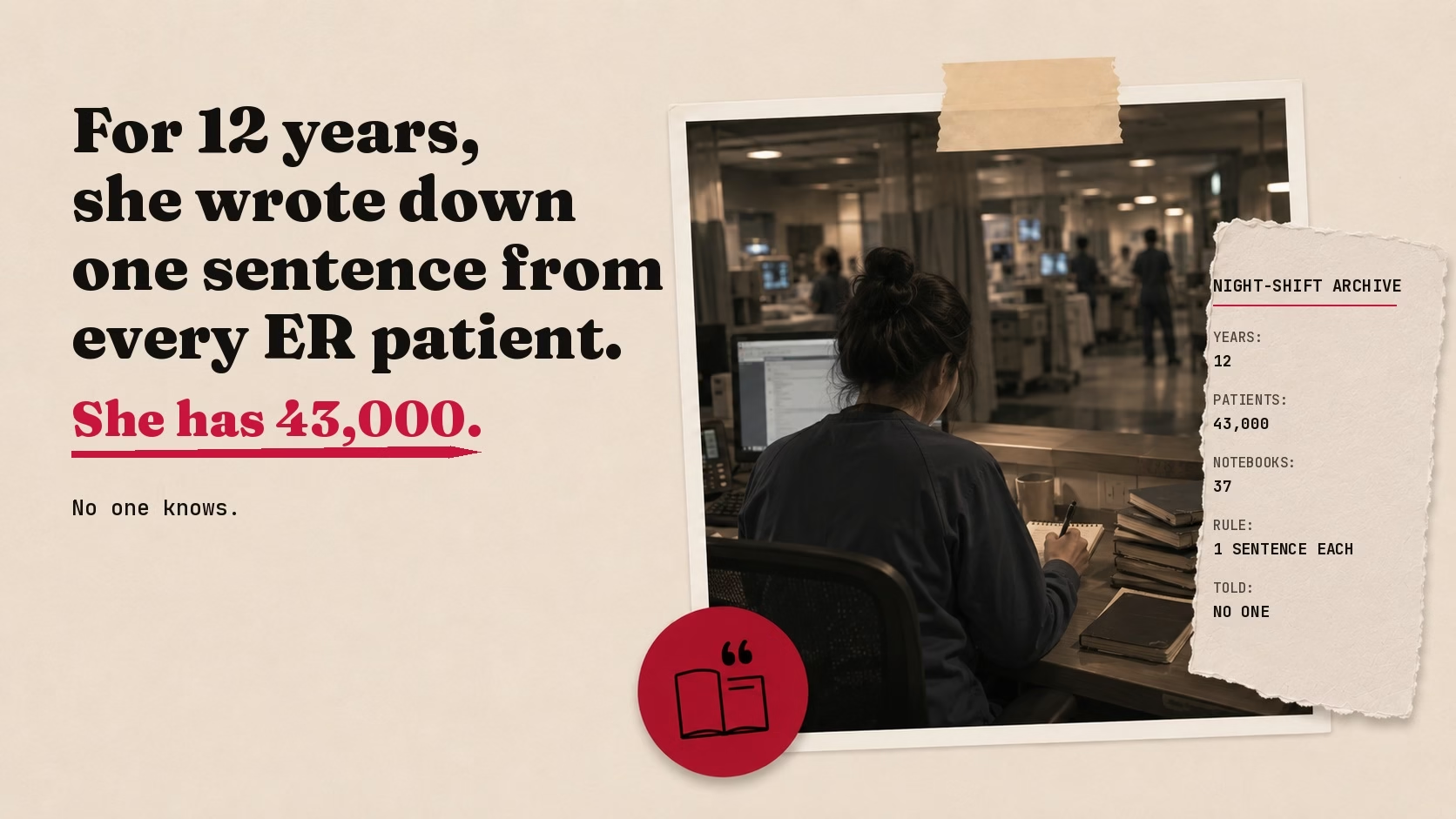
For twelve years, she has quietly written down one sentence from every emergency room patient she has scribed. She has 43,000 sentences.
This is a story about a woman in Baltimore, the specific job she has held for the past twelve years, and the specific parallel practice she has quietly sustained alongside that job — without her employer knowing, without her coworkers knowing, without any of the specific patients she has, over twelve years, sat next to knowing — for the entirety of that time.
The woman — I will call her Marisol, because she chose the name, and because when I asked why, she said, “It is the name of a person who is doing a specific quiet thing that she has not yet, in her own life, fully understood, which I have decided is what I am,” which I found accurate — is forty-one. She has, since the specific age of twenty-nine, worked as a night-shift medical scribe at a large urban hospital emergency room in downtown Baltimore.
She works, in the specific way of the specific role of a night-shift medical scribe at a large urban emergency room, four twelve-hour shifts per week. Her shifts run from 7 p.m. to 7 a.m. She has, over the past twelve years, missed — by her careful accounting — approximately thirty-one shifts total. Twenty-two of those were for a specific serious illness her mother had in 2019. Six were for a specific set of small illnesses of her own. Three were for a specific unexpected car accident that Marisol was, in her own account, “in and thankfully not seriously hurt by.”
She has, in the specific job of a night-shift medical scribe at a large urban emergency room, documented — in the specific way of the specific job — approximately forty-three thousand patient visits.
She has, over those forty-three thousand visits, done her specific documentation job with the specific care that the specific job requires. She has recorded, in the specific electronic charting system her hospital uses, the specific medical history, the specific presenting symptoms, the specific vital signs, the specific physical exam findings, the specific diagnostic tests, the specific diagnoses, and the specific treatment plans for each of the specific forty-three thousand patients she has, over twelve years, sat next to during her twelve-hour shifts.
She has, alongside this specific documentation, done something else.
She has, alongside the specific charting, quietly written down — in a specific separate small paper notebook she keeps in the specific inside pocket of her scrub jacket — one specific sentence from every patient.
She has done this, in her own careful account, for every one of the approximately forty-three thousand patients she has scribed.
She has, at the time of this writing, approximately forty-three thousand sentences.
The notebook
I want to describe the notebook carefully, because the notebook — or rather, the specific succession of notebooks — is the specific object this story is centered on.
The specific notebook is, in Marisol’s careful description, a specific brand of small pocket-sized notebook that she has purchased, over the years, from a specific stationery store in the Federal Hill neighborhood of Baltimore. The specific store has been in business since 1974. Marisol has told me she has, over twelve years, purchased — by her careful accounting — thirty-seven of the specific notebooks.
Each notebook, in Marisol’s account, holds approximately eleven hundred to twelve hundred sentences.
She has, over twelve years, filled thirty-six of the notebooks completely. She has, at the time of this writing, been in the middle of filling the thirty-seventh.
She has, in the strict sense, never lost one of them.
She keeps the completed notebooks, in Marisol’s account, in a specific locked wooden box on the specific top shelf of the closet in the specific spare bedroom of her small apartment in the Hampden neighborhood of Baltimore. The specific box was, she has told me, “a gift from my father when I was in my early twenties. It has, over the years, become the specific place I have decided the specific notebooks belong.”
The specific active notebook — the specific thirty-seventh — is always, in Marisol’s account, on her person. She has told me she has, in twelve years, “never once been at work without a specific notebook and a specific pen in the specific inside pocket of my scrub jacket.”
She has, over twelve years, developed — in the specific way of the practice — a specific consistent handwriting for the sentences. She has told me: “I have, over twelve years, come to write the specific sentences in a specific version of my handwriting that is, in the specific way of the notebooks, only for the notebooks. I do not, in the strict sense, use the specific handwriting for anything else. It is the specific handwriting that I have decided the specific notebooks require.”
The sentences
I want to describe the sentences carefully, because they are the specific thing this story is about.
The sentences, in Marisol’s account, are — without exception — sentences that specific patients have said to her, in her hearing, during the specific twelve-hour night shifts she has been working alongside them.
She has told me the sentences are not, in the strict sense, medically relevant. She has told me: “I have, over twelve years, not been in the specific business of writing down the specific medical information that the specific patients tell the specific doctors. I have, in the specific business of my job, been documenting the specific medical information in the specific charting system. The specific sentences in the notebooks are, in the specific sense of the practice, the specific opposite of medical information. They are the specific sentences the patients say to me — or to the specific empty air in front of them — that are not, in the strict sense, part of the specific medical encounter.”
She has told me the specific criteria for a specific sentence being written in the specific notebook is, in her own careful phrasing, the following: “The specific sentence must have been said, by the specific patient, in my specific hearing, during my specific shift. The specific sentence must be, in the specific way I have come to understand the practice, the specific sentence that the specific patient has said that I have decided I do not want to forget.”
She has told me she has, in twelve years, developed a specific practiced sense of which sentence, from each specific patient, meets the specific criteria.
She has told me she has, in twelve years, “occasionally been uncertain, in the specific case of a specific patient who said many memorable specific things, which specific sentence to write down. In those specific cases, I have written down the specific sentence I first considered writing down. I have decided, over twelve years, that the specific first sentence I consider writing down is, in the specific way of the practice, the specific correct one.”
She has told me a specific small selection of the sentences she has, over twelve years, written down.
She has told me — with permission from herself, in the specific way of a person who has decided that the specific practice is now ready to be shared, at least in specific small amounts, with a specific single reader she has decided she can trust — the following.
She has told me: “One of the sentences, from a specific woman in her early sixties who came in with a specific broken wrist she had gotten from tripping over her specific dog in the specific hallway of her house, is: ‘He is not, in the strict sense, my dog. He is my late husband’s dog. But we have, over the past four years, become one another’s specific person.'”
She has told me: “One of the sentences, from a specific eleven-year-old boy who came in with a specific case of appendicitis, is: ‘I am not, in the strict sense, scared. I am only worried about my mother. She is not, in the strict sense, good at emergencies.'”
She has told me: “One of the sentences, from a specific man in his late seventies who came in with what turned out to be a specific mild heart attack, is: ‘If I die tonight, I would like you to know that I have, in the past hour, been thinking about a specific afternoon in 1962. It was a specific Tuesday. I was, at that specific time, twelve years old. I have, in the past forty years, thought about the specific afternoon perhaps once a year. It was, in the specific way of certain afternoons, one of the specific most important ones.'”
She has told me: “One of the sentences, from a specific woman in her thirties who came in for a specific case of severe food poisoning, is: ‘I do not, in the strict sense, want to complain. But I have not felt this specific bad since 2007.'”
She has told me: “One of the sentences, from a specific young man in his early twenties who came in with a specific broken hand he had gotten from punching a specific wall, is: ‘I would like you to know that I was, in the specific moment I punched the specific wall, not angry. I was, in the specific moment, only extremely tired of being sad. I have decided, in the specific hour since, to accept that this is not, in the strict sense, a good response to being extremely tired of being sad.'”
She has told me: “One of the sentences, from a specific woman in her mid-eighties who came in for a specific case of pneumonia, is: ‘I have, in my life, been given more than I have deserved. I have not, in my life, ever said this out loud to anyone. I would like you to know that I am, at this specific moment, saying it out loud.'”
She has told me she has, over twelve years, forty-three thousand of them.
She has told me she has, in twelve years, never shown any of them to anyone.
Why she started
I asked Marisol, in each of our three conversations, why she started.
She has told me the specific origin of the practice is, in her own careful account, “specific but not, in the strict sense, dramatic.”
She has told me the practice began, in her own account, in the specific third month of her employment at the hospital. She had been, at that specific point, twenty-nine years old. She had been, at that specific point, in her own account, “specifically new to the specific work of the emergency department. I had, at that specific point, been trained in the specific documentation software. I had, at that specific point, understood — in the specific way of a specific new medical scribe — that the specific job I had been hired to do was to record, in the specific way of the specific job, only what the specific doctors would need for the specific medical chart.”
She has told me: “I had, at that specific point, also been in the specific position of hearing — in the specific way of a specific medical scribe sitting in the specific corner of the specific exam room — every specific thing every specific patient said.”
She has told me: “I had, in the specific first three months of the specific job, been in the specific position of hearing the specific patients say many specific things that were not, in the strict sense, part of the specific medical encounter. I had been in the specific position of hearing the specific patients — in the specific way of the specific patients in the specific vulnerable position of a specific emergency department visit at 3 a.m. — say specific small specific things that were, in the specific way of the specific small specific things, remarkable.”
She has told me: “I had, at the end of the specific third month, been in the specific position of having sat next to approximately three hundred specific patients. I had, at that specific point, understood something specific.”
She has told me the specific something was, in her own careful account, the following.
She has told me: “I had understood that the specific small specific things the specific patients had, over the specific three months, been saying to me — in the specific way of the specific small specific things — were, in the specific sense that had begun to matter to me, being lost. I was the specific only person hearing them. I was, in the specific way of the specific job, sitting in the specific corner. The specific patients would, in the specific way of the specific emergency department, be treated and discharged. The specific doctors would, in the specific way of the specific job, remember only the specific medical information. The specific small specific things the specific patients had said — the specific small specific sentences that were not, in the strict sense, medically relevant — would, in the specific way of the specific work, disappear.”
She has told me: “I had decided, at the end of the specific third month, that I did not, in the specific way of my ongoing internal life, want them to disappear.”
She has told me: “I had, on the specific first shift of the specific fourth month, brought a specific notebook to work. I had, on the specific first shift, written down the specific first sentence.”
She has told me: “I have, in the specific twelve years since, continued.”
Why she has never told anyone
I asked Marisol, in our second conversation, why she has never — in twelve years — told anyone about the practice.
She has told me the reasons are, in her own careful account, complicated.
She has told me: “I have not told the specific hospital because the specific hospital would, in the specific way of a specific large urban hospital in the specific present regulatory environment, be required to consider whether the specific practice constitutes a specific violation of specific patient privacy protections. I have decided, over twelve years, that the specific practice is not, in the specific way I have designed it, a specific violation.”
She has told me: “The specific sentences do not, in the strict sense, contain any specific identifying information about the specific patients. I do not, in the strict sense, write down the specific patients’ specific names. I do not, in the strict sense, write down the specific patients’ specific ages beyond the specific rough age range I would use to describe them. I do not, in the strict sense, write down the specific dates the specific sentences were said. I do not, in the strict sense, write down the specific medical conditions the specific patients presented with, except in the specific brief way of establishing the specific context for the specific sentence.”
She has told me: “The specific notebooks are, in the strict sense, a specific anonymized record of specific things said by specific people in the specific vulnerable moment of a specific medical encounter. But the specific specific people are not, in the strict sense, identifiable from the specific record. The specific record cannot, in any strict sense, be used to identify any specific patient.”
She has told me: “I have, over twelve years, considered whether this specific distinction is sufficient. I have decided, tentatively, that it is.”
She has told me: “But I have, in the specific way of a specific person who is aware that specific hospital administrators might disagree with my specific interpretation, decided not to bring the specific practice to the specific attention of the specific hospital. I have decided that the specific practice is, in the specific way of the twelve years, mine. I have decided that the specific practice belongs, in the specific way of the twelve years, in the specific quiet space between me and the specific patients I have been listening to.”
She has told me: “I have not told the specific patients because the specific patients are, in the specific way of the specific twelve years, no longer available to be told. I do not, in the strict sense, know where they are. I do not, in the strict sense, know their names. I do not, in the strict sense, know whether they are alive. I have, over twelve years, moved through the specific hospital in the specific way of a specific medical scribe — in the specific way of a specific person who sits next to specific patients for the specific duration of their specific emergency visits and then, in the specific way of the specific job, moves on.”
She has told me: “I have not told my specific coworkers because I have decided, over twelve years, that the specific practice is, in the specific way of the twelve years, private.”
She has told me: “I have not told my specific family because I have decided, over twelve years, that the specific practice is, in the specific way of the twelve years, private.”
She has told me: “I have told, in the specific twelve years, exactly two people. I told my specific therapist, in the specific ninth year of the practice, in the specific context of a specific conversation about a specific unrelated matter. I told you, in the specific twelfth year, in the specific context of the specific work you are doing.”
She has told me: “I have decided, tentatively, that this is the specific total number of people who need to know about the specific practice.”
What she does not know
I asked Marisol, in our final conversation, what she has, over twelve years, come to be uncertain about.
She has told me the specific thing she has, over twelve years, been most uncertain about is the specific question of what she plans to do with the specific notebooks.
She has told me: “I have, over twelve years, thought about this a great deal. I have not, in the twelve years, arrived at a specific decision.”
She has told me she has considered — over twelve years — the specific possibilities.
She has considered, she has told me, the specific possibility that the specific notebooks are, in some form, eventually intended to be published. That she is, in the specific way of a specific slow archivist, quietly collecting the specific raw material for a specific eventual book that would, in some form, share the specific sentences with a specific public audience. She has told me she has considered this possibility “many times over the twelve years.” She has told me she has, “in the twelfth year, come to believe it is not the specific correct interpretation of the specific practice. I have decided that the specific fact of my not having, in twelve years, ever shared a specific single one of the specific sentences with a specific single reader — until, in the specific twelfth year, sharing a specific six of them with you — is, in the specific way of the twelve years, evidence that the specific practice is not, in the strict sense, intended for publication.”
She has considered, she has told me, the specific possibility that the specific notebooks are, in some form, eventually intended to be destroyed. That she has been, in the specific way of a specific slow witness, quietly accumulating the specific raw material for a specific eventual moment of specific ceremonial burning — the specific moment at which she will, in the specific way of a specific person who has decided the specific witnessing is complete, release the specific sentences from the specific ongoing record. She has told me she has considered this possibility “several times over the twelve years.” She has told me she has, in the twelfth year, come to believe it is not the specific correct interpretation of the specific practice either. She has told me: “The specific idea of destroying the specific notebooks makes me, in the specific way of a specific person who has been building something for twelve years, specifically uncomfortable. I do not think the specific notebooks are, in the specific way of what I have been building, intended to be destroyed.”
She has considered, she has told me, the specific possibility that the specific notebooks are, in some form, eventually intended for a specific single person — a specific single reader who, at some future point, will inherit the specific notebooks and will do, with them, whatever the specific single reader decides. She has told me she has, in the twelfth year, come to believe this possibility is the closest to correct. She has told me: “I have, in the twelfth year, begun to believe that the specific notebooks are, in some form, intended for a specific single future reader who I do not yet know. I do not know if the specific reader will be a specific person I know now. I do not know if the specific reader will be a specific person I meet in the specific future. I do not know if the specific reader will be a specific person who is, at the specific time I decide to give them the specific notebooks, only a small child.”
She has told me: “I have decided, in the twelfth year, that the specific correct decision about the specific notebooks is to not, in the specific twelfth year, decide anything about the specific notebooks. I have decided that the specific correct decision is to continue the specific practice, and to continue to fill the specific notebooks, and to allow the specific eventual purpose of the specific notebooks to reveal itself in the specific way that certain slow purposes eventually do.”
She has told me: “I have decided that the specific practice is, in the specific way of the twelve years, its own specific purpose.”
She has told me: “I have decided that the specific eventual purpose of the specific notebooks is, in the specific way of things that will reveal themselves in their own time, not, in the specific twelfth year, mine to decide.”
I asked Marisol, in our final conversation, what she has, over twelve years, come to be certain about.
What she does know
She has told me the specific thing she has, over twelve years, come to be certain about is the following.
She has told me: “I have come to be certain that the specific practice has, over twelve years, changed me. I have come to be certain that I am, in the specific way of a specific person who has spent twelve years quietly listening to the specific small things specific patients say to me in specific vulnerable moments of specific emergency department visits, a specific different kind of person than I would have been if I had not, in the specific fourth month of the specific job, brought the specific first notebook to work.”
She has told me: “I have come to be certain that the specific practice has, over twelve years, given me a specific ongoing form of attention that most people in most jobs do not, in the specific way of most jobs, cultivate. I have come to be certain that the specific practice has, over twelve years, made me a specific slower and a specific more careful person than the specific person I was at twenty-nine.”
She has told me: “I have come to be certain that the specific practice has, over twelve years, given me a specific set of forty-three thousand specific sentences that are, in the specific way of the sentences, the specific accumulated evidence that the specific patients I have been sitting next to have, over the specific twelve years of their specific lives, been living specific lives in which they have been, in the specific vulnerable moments of specific emergency department visits, capable of saying the specific small extraordinary specific things I have been writing down.”
She has told me: “I have come to be certain that the specific patients did not, in the strict sense, need to say the specific extraordinary specific things. The specific patients could have, in the specific way of most patients, said only the specific medical information that the specific doctors needed. They chose, in the specific vulnerable moment, to say something else. They chose, in the specific vulnerable moment, to say the specific thing that they said.”
She has told me: “I have come to be certain that the specific quiet miracle of my specific twelve years of specific work at the specific emergency department is that the specific patients I have been sitting next to have, in the specific vulnerable moment of a specific emergency department visit, been consistently capable of the specific small extraordinary specific things they have been saying.”
She has told me: “I have come to be certain that this is, in the specific way of what the specific practice has been documenting, the specific most important thing I have learned in twelve years of the specific job.”
She has told me: “I have come to be certain that ordinary people, in specific vulnerable moments, are consistently capable of specific extraordinary things.”
She has told me: “I have decided, in the specific twelfth year, that this is the specific thing I have been, in the specific way of the specific practice, quietly documenting.”
She has told me: “I would like the specific documentation to continue for the specific remainder of my time in the specific job. I would like the specific documentation to continue in the specific way I have been documenting it. I would like the specific notebooks to be, in the specific way of the twelve years, the specific ongoing record of the specific extraordinary capacity of the specific ordinary patients I am, in the specific way of my job, quietly sitting next to.”
She has told me: “I would like the specific practice to continue to be, in the specific way of the twelve years, mine.”
She has told me: “I have decided, tentatively, that this is enough.”
What this is
I have, in the weeks since I first heard this story, thought about the specific and unusual ways that certain workers, in certain specific jobs, will develop specific parallel practices that operate quietly alongside their specific formal job responsibilities and that produce — over specific long periods of time — specific archives of specific things that would not, in the strict sense, otherwise exist. Marisol did not, in the strict sense, decide in the fourth month of her employment to become — for twelve years — the specific quiet witness of forty-three thousand specific small extraordinary specific sentences said by forty-three thousand specific patients in specific vulnerable moments of specific emergency department visits. She had, in the fourth month, only decided to bring a specific notebook to work. The specific practice grew, over twelve years, into the specific version of ongoing work that it is now.
The specific practice is, in the specific way of the arrangements this publication is now in the specific business of documenting, a specific quiet act of care sustained by a specific person, over a specific long period of time, in the specific absence of anyone asking her to sustain it. It is being sustained by a specific woman, quietly, in the specific corner of a specific emergency department in a specific hospital in a specific city, on specific twelve-hour night shifts, four nights a week, without her employer knowing, without her coworkers knowing, without any of the specific patients she has sat next to knowing. It is being sustained, in the specific way of the practice, because she has decided, in some quiet way, that the specific small extraordinary specific things the specific patients have been saying to her are, in the specific way of what she has come to believe about the specific patients, worth being recorded.
I do not know exactly what to make of this. I think it is, in the specific way of the practices this publication has been describing, extraordinary. I think it is, in the specific way of the specific stories that stretch the pattern I have been describing slightly, a specific version of care that is not, in the strict sense, addressed to the specific people receiving it. It is a specific version of care addressed to the specific ongoing record of what specific people said. It is, in the specific way of the practice, a specific version of care addressed — quietly, without any specific recipient asking to be addressed — to the specific historical record. (For a related earlier piece on the specific ways that certain people, in the specific way of their specific work, quietly document specific things about specific other people that would not, in the strict sense, otherwise be documented, see the Wattalife story about the seven employees at a small municipal water treatment plant in central Nebraska who have, for twenty-nine years, been writing thirty-two-page letters to their eventual replacements.)
Marisol told me, at the end of our final conversation, that she had, the previous night, worked her regular twelve-hour shift. She had, in her own account, “scribed for approximately thirty-one specific patients, which is a specific typical number for a specific Tuesday-into-Wednesday overnight shift at the specific emergency department.”
She had, in her own account, written down thirty-one specific sentences.
She has told me she had, at the end of the specific shift, sat in her car for approximately five minutes in the specific hospital parking garage before driving home. She had, in her own account, taken the specific notebook out of the specific inside pocket of her scrub jacket. She had, in her own account, read through the specific thirty-one specific sentences she had written down over the specific twelve hours.
She has told me she had, in her own account, “sat with them for a specific quiet moment.”
She has told me she had, in her own account, then put the specific notebook back into the specific inside pocket of the scrub jacket.
She has told me she had, in her own account, driven home.
She has told me she plans to do the same specific thing after her specific next shift.
She has told me she plans, in the specific way of the twelve years, to keep doing it.
She has told me: “I do not, in the specific way of the twelve years, know exactly what I am doing. I know only that I have decided, in the specific way of the twelve years, that it is worth continuing to do.”
—
Margot Hale is the editor of Wattalife. She has, since reporting this story, been considering the specific ongoing parallel practices that certain workers in certain specific jobs are, without their employers or coworkers or the specific people they are, in the specific way of their jobs, in contact with, ever knowing about, quietly sustaining. She suspects there are more of them than she has previously understood. She has decided, tentatively, to be specifically alert for them. She has decided that they are — in the specific way of the specific practices this publication has been documenting — among the specific most important things that most people, at scale, are quietly doing.