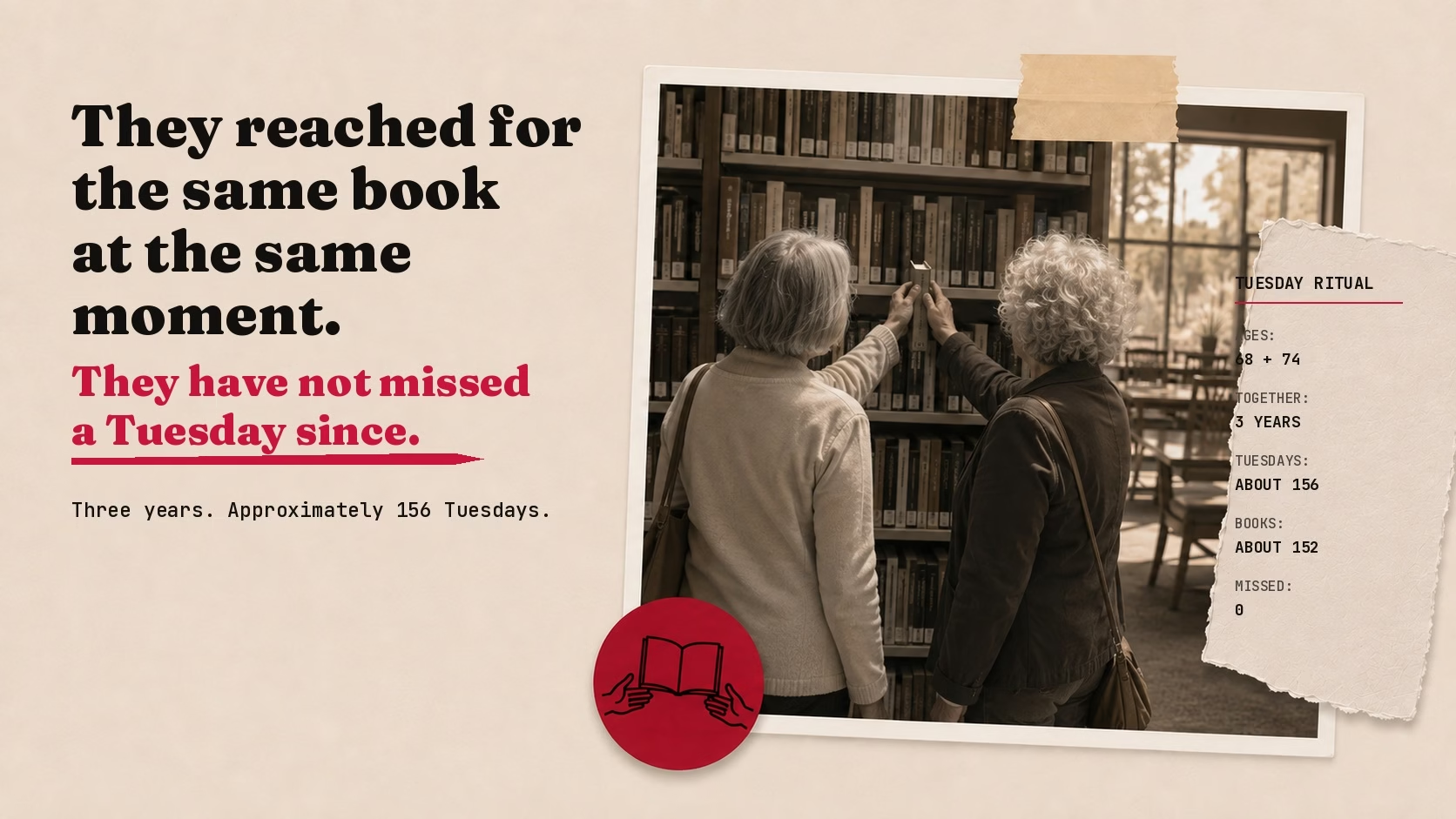
Three years ago, they reached for the same book at the same moment. They have not missed a Tuesday since.
This is a story about two women in Tucson, Arizona, the specific Tuesday afternoon in the second week of February 2023 on which they met at a specific branch of the Tucson public library system, and the specific weekly practice they have — without ever formally deciding to — sustained together in the three years since.
The two women — I will call them Constance and Vivian, because they chose the names, and because when I asked why, Constance said, “They sound like the names of two women who would, in the specific way of certain kinds of older women, decide that they have found the specific person they have decided to spend their specific Tuesday afternoons with,” which I found accurate — are sixty-eight and seventy-four. Constance, the specific younger one, is a retired second-grade teacher who taught in the Tucson Unified School District for approximately thirty-eight years. Vivian, the specific older one, is a retired hospice social worker who spent the entirety of her thirty-one-year career at a specific hospice organization in Tucson that has, since her retirement, become the specific hospice organization that has, in the specific way that certain small institutions do, been a specific quiet presence in the lives of a very large number of Tucson families over the past four decades.
Constance was, at the time of the meeting, sixty-five. Vivian was seventy-one.
Neither of them, in her own careful account, was — at the time — looking for a specific new friend.
Constance had, in her own account, “been divorced for eleven years by that specific point. I had my daughter and her two children. I had a specific book club I had been in for approximately fifteen years. I had, in the specific way of a specific retired woman in her mid-sixties, the specific quiet ordinary life I had, over the years, decided I wanted.”
Vivian had, in her own account, “been widowed for approximately four years by that specific point. I had my three grown children and their specific families. I had, in the specific way of a specific woman in her early seventies who has spent her professional life sitting next to specific dying people, developed the specific practice of ordinary daily solitude that I had, over the years, come to prefer.”
Neither of them had, in the strict sense, been looking.
They had, in the strict sense, both been reaching for the same book.
The specific book
I want to describe the specific book carefully, because the specific book is the specific object this story is centered on.
The specific book, in Constance’s careful account, is a specific mid-length novel by a specific American writer that had been, at the time of the meeting, approximately twelve years old.
Neither Constance nor Vivian, in her own account, had ever read the specific novel before.
Constance had, in her own account, come to the specific branch of the Tucson public library system that specific Tuesday afternoon because she had, in her book club the previous week, heard the specific novel mentioned by a specific member of the book club — a woman Constance had told me is named Josefina, and who had, in Constance’s account, “spoken about the specific novel in the specific way that certain readers speak about the specific books that have, in some specific way, mattered specifically to them. Josefina had not, in the specific way of the book club, been recommending the specific novel. She had only, in the specific way of a specific brief mention, told the group that she had, over the previous week, been thinking about the specific novel a great deal.”
Constance had, in her own account, decided the following morning — a specific Wednesday — that she would, at some point in the coming week, go to the library and check out the specific novel.
She had, in her own account, gone to the library the following Tuesday afternoon at approximately 2:15 p.m.
Vivian had, in her own account, come to the specific branch of the Tucson public library system that specific Tuesday afternoon for entirely different specific reasons. She had, in her own account, been going to the specific branch every Tuesday afternoon for approximately eight years. She had, in her own account, developed the specific practice, following her retirement, of spending the specific hours between 2:00 p.m. and 4:00 p.m. every Tuesday in the specific reading room of the specific branch. She would, in the specific practice, “arrive at the specific library, walk the specific fiction section for approximately fifteen minutes browsing without any specific target, select one specific book that had, in the specific way of the specific browsing, caught my specific attention, and then read the specific book in the specific reading room until approximately 4:00 p.m., at which specific point I would either check out the specific book to continue reading it at home or return it to the specific shelf if I had decided, in the specific way of the specific practice, that the specific book was not, in the specific sense, the specific book I had been looking for that specific week.”
Vivian had, on the specific Tuesday afternoon in the second week of February 2023, been in the specific fiction section browsing. She had, in her own account, been in the specific process of considering a specific different book — a specific different mid-length novel by a specific different American writer — when she had, in the specific way of a specific browser whose specific attention had been briefly caught by a specific different specific thing, glanced at the specific shelf next to the specific shelf she had been considering.
She had, in her own account, seen the specific title of the specific novel that would, in the specific coming ninety seconds, become the specific novel this story is about.
She had, in her own account, reached for it.
The specific ninety seconds
I want to describe the specific ninety seconds carefully, because they are the specific ninety seconds that established everything that has, in the three years since, followed.
Constance had, at the specific moment Vivian reached for the specific novel, been approaching the specific shelf from the specific opposite direction.
She had, in her own account, “been in the specific process of reading the specific call numbers along the specific shelf, moving in the specific way of a specific person who is looking for a specific book with a specific title. I had, in the specific way of the specific looking, been proceeding along the shelf from left to right.”
She had, in her own account, seen the specific title of the specific novel at approximately the specific same moment Vivian had seen it from the specific opposite direction.
She had, in her own account, reached for it.
The two women’s specific hands had, in Constance’s careful account, arrived at the specific book at the specific same moment.
Both hands had, in Constance’s careful account, closed briefly on the specific book.
Both women had, in Constance’s careful account, looked up.
They had, in the specific way of two specific women who have unexpectedly reached for the same specific book at the same specific moment in a specific public library, briefly looked at each other.
They had, in Constance’s careful account, both begun to laugh.
Constance has told me the specific laughter had been, in her own careful account, “the specific version of laughter that certain kinds of small unexpected specific accidents will, between two specific strangers who have not, in the strict sense, been prepared for the specific accident, produce.”
She has told me the specific laughter had lasted, in her own careful account, “for approximately seven or eight seconds.”
She has told me that at the specific end of the specific seven or eight seconds, Vivian had, in her own account, said the following: “You take it. I was, in the strict sense, only browsing.”
She has told me that she had, in her own account, said in response: “No. Please. I had, in the strict sense, come to the library today specifically to check out this specific book. You take it. I can get it another day.”
She has told me that Vivian had, in her own account, then said: “In that case, I would like to know what the specific book is. I have, in the strict sense, been reaching for it without knowing what it is.”
She has told me she had, in her own account, told Vivian the specific title of the specific novel.
She has told me she had, in her own account, told Vivian the specific reason she had, in the specific book club the previous week, been made aware of the specific novel.
She has told me the specific conversation that had, in the specific way of the specific ninety seconds, followed had lasted, in her own account, “approximately three minutes.”
At the specific end of the specific three minutes, Vivian had, in Constance’s account, said the following: “I have a specific proposal. If you would be willing, I would like to suggest that you and I both, at this specific moment, agree to read the specific novel over the specific coming week. I would like to suggest that we then, next Tuesday afternoon, meet at this specific library at this specific time, at this specific shelf, and discuss the specific novel.”
She has told me she had, in her own account, considered this specific proposal for approximately five seconds.
She had, in her own account, said: “Yes. Let us do that.”
Vivian had, in Constance’s account, said: “In that case, since you had planned to check out the specific book today, I would like to leave you the specific book. I will, in the specific way of the specific arrangement, purchase a specific copy of the specific book from the specific used bookstore around the corner. I will read my specific copy. You will read the specific library copy. We will meet, next Tuesday, and discuss.”
She has told me she had, in her own account, said: “That sounds like a specific reasonable arrangement.”
Vivian had, in Constance’s account, extended her specific hand.
Constance had, in her own account, shaken Vivian’s specific hand.
They had, in Constance’s careful account, then walked in opposite directions — Vivian toward the specific front of the library, Constance toward the specific reading room.
They had, in Constance’s careful account, “not, at that specific moment, exchanged our specific names.”
They had, in Constance’s careful account, met again the following Tuesday afternoon at 2:15 p.m. at the specific shelf.
Vivian had, in Constance’s account, arrived first. She had, in the specific way of a specific person who had been considering the specific proposal she had made the previous week, been in the specific process of standing next to the specific shelf reading the specific back cover of a specific different book when Constance had, in the specific way of a specific person arriving at a specific meeting at the specific meeting time, arrived.
They had, in Constance’s account, greeted each other in the specific way of two specific people who have been reading the same specific novel over the specific previous week without knowing anything about each other.
They had, in Constance’s account, exchanged their specific names.
They had, in Constance’s account, then walked together to the specific reading room. They had, in Constance’s account, sat down at a specific table.
They had, in Constance’s careful account, discussed the specific novel for approximately three hours.
They had, in Constance’s careful account, at the specific end of the specific three hours, agreed to meet again the specific following Tuesday to discuss the specific next book.
They have, in the specific way of the specific arrangement, met every specific Tuesday afternoon since.
The three years
I want to describe the three years carefully, because the three years are the specific thing that has, in the specific way of the arrangement, transformed the specific chance meeting into what has become — in Constance’s careful phrasing — “the specific most important daily relationship in my ongoing life.”
The specific arrangement has, in Constance’s account, evolved, over three years, into the following.
Every specific Tuesday afternoon, at 2:15 p.m., Constance and Vivian meet at the specific branch of the Tucson public library system. They meet at the specific shelf where they had, in the specific way of the specific ninety seconds, first met.
They then walk to the specific reading room. They sit at the specific same specific table where they had, in the specific way of their first specific Tuesday, first sat.
They then discuss the specific book they had both, in the specific way of the specific arrangement, been reading over the specific previous week.
They have, in the specific way of the specific arrangement, been reading — in three years — approximately one hundred and fifty-two books. Constance has told me the specific number is, in her own careful accounting, approximately one hundred and fifty-two — one specific book per specific Tuesday, minus the specific four Tuesdays over three years on which one of them had been unable, in the specific way of a specific hard week, to finish the specific book. On those specific four Tuesdays, they had, in the specific way of the specific arrangement, discussed the specific book they had been reading the specific previous week for a second consecutive Tuesday. They had, in the specific way of the specific arrangement, then read the specific new book over the following week.
The discussions have, in Constance’s careful account, ranged over three years from a specific low of approximately two hours to a specific high of approximately five and a half hours. The average, in Constance’s careful accounting, has been approximately three hours and fifteen minutes per Tuesday.
They have, in the specific way of the arrangement, developed a specific consistent choice-making practice for the specific books. Each week, in Constance’s account, the specific woman whose turn it is that specific week — they alternate, in the specific way of the arrangement — selects the specific book for the specific following week. The selection is made, in the specific way of the arrangement, by the specific woman whose turn it is, at the specific end of the specific Tuesday discussion, walking to the specific fiction section, selecting a specific book that she has, in the specific way of the specific arrangement, decided the two of them should read together, and — in the specific way of the arrangement — handing the specific book to the specific other woman as the specific way of ending the specific Tuesday.
They have, over three years, read together — in this specific way — approximately one hundred and fifty-two books.
They have, in three years, never missed a Tuesday.
They have, in three years, had the specific two of them been present in the specific reading room every specific Tuesday afternoon from 2:15 p.m. to some specific point between 4:15 p.m. and 7:45 p.m.
Neither of them, in three years, has been out of Tucson on a Tuesday. Neither of them, in three years, has been sick on a Tuesday. Neither of them, in three years, has, in the specific way that certain kinds of ongoing arrangements will eventually falter, been unable to attend.
Constance has told me: “The specific arrangement has, over three years, become the specific most consistent relationship of my adult life. I have not, in the specific way of the arrangement, missed a specific Tuesday afternoon with Vivian in three years. I have, in three years of Tuesdays, been made to reschedule other specific things — specific medical appointments, specific family visits, specific book club events, specific opportunities for specific different social occasions — in order to preserve the specific Tuesday afternoon with Vivian. I have, in the specific way of the arrangement, come to organize my specific weekly life around the specific Tuesday afternoon at the specific library.”
She has told me: “I have come to be certain, in three years, that the specific arrangement is, in the specific way of the arrangement, the specific single most important thing in my ordinary weekly life.”
She has told me: “This is not, in the specific way of the arrangement, a thing I had, at sixty-five, expected to be able to say.”
What each of them has decided about the other
I asked Constance and Vivian, separately, in the course of three phone conversations each, what each of them has, in three years, come to think about the specific other.
They have told me — and I want to note that they told me this separately, without having discussed it — approximately the same thing.
Constance has told me: “I have, in three years, come to know Vivian in a specific way I have not, in the strict sense, known another specific person. I have come to know her through the specific books she has, over three years, chosen for us to read. I have come to know her through the specific things she has, over three years, said about the specific books during the specific Tuesday discussions. I have come to know her through the specific specific ways she has, over three years, allowed me to see the specific version of her ongoing internal life that she has, in the specific way of a specific woman who spent thirty-one years sitting next to specific dying people, decided is the specific version she is comfortable sharing.”
She has told me: “I do not, in the strict sense, know a great deal about Vivian’s ordinary daily life. I know she has three grown children. I know she was, in some form, close with her late husband. I know she reads, in the specific way of certain kinds of long-tenured readers, in a specific way that suggests she has been reading carefully for the entirety of her adult life. I know she prefers, in her ordinary daily food, specific simple ordinary things. I know she does not, in the specific way of her ordinary daily life, drink alcohol.”
She has told me: “But I do not, in the strict sense, know Vivian in the specific way of a specific woman who has been my specific ordinary friend for three years. I know Vivian, instead, in the specific way of a specific woman who has been the specific person I have discussed one hundred and fifty-two books with over three years of Tuesdays. I know her, in the specific way, more intimately than I know anyone else in my ongoing life. I know her, in the specific way, less completely than I know anyone else in my ongoing life. I have decided, over three years, that this specific combination — of specific intimacy and specific incompleteness — is, in the specific way of the arrangement, exactly what I want.”
Vivian has told me, in her own separate account, approximately the same thing.
She has told me: “I have, in three years, come to know Constance in the specific way that only a specific weekly practice of specific reading and specific discussion of specific books can produce. I have come to know the specific texture of her specific ongoing thinking. I have come to know the specific ways she is, in the specific way of a specific person, unlike me. I have come to know the specific ways she is, in the specific way of a specific person, like me. I have come to know the specific small things she is, in the specific way of the arrangement, willing to share about her ongoing internal life in the specific context of specific literary discussion.”
She has told me: “I do not, in the strict sense, know Constance in the specific way of a specific ordinary friend. I have not, in three years, been to Constance’s specific house. Constance has not, in three years, been to my specific house. We have not, in three years, met each other’s specific families. We have not, in three years, had a specific meal together outside the specific reading room of the specific library.”
She has told me: “The specific arrangement is, in the specific way of the arrangement, entirely contained within the specific Tuesday afternoon at the specific library. It does not, in the specific way of the arrangement, extend beyond that.”
She has told me: “I have decided, in three years, that this is the specific correct shape for the specific arrangement. I have decided, in three years, that the specific arrangement produces — in the specific way of the arrangement — something that would not, in the strict sense, be produced by a specific different shape of specific ordinary friendship.”
She has told me: “I have decided that the specific arrangement is, in the specific way of the arrangement, the specific most important thing I do.”
Why they have not expanded
I asked Constance, in our final conversation, why the specific arrangement has not — in three years — expanded beyond the specific Tuesday afternoon.
She has told me she has, in her own careful account, considered this question a great deal.
She has told me: “I have, in three years, occasionally considered the specific possibility that Vivian and I should, in some form, spend more time together. I have considered the specific possibility of adding a specific second weekly meeting. I have considered the specific possibility of inviting Vivian to my specific book club. I have considered the specific possibility of inviting Vivian to my specific house for a specific meal.”
She has told me: “I have, in three years, decided each time not to propose any of these specific things.”
She has told me the specific reasons are, in her own careful account, the following.
She has told me: “I have decided, over three years, that the specific arrangement is producing — in the specific way of the arrangement — a specific quality of specific attention that would not, in the specific way of expansion, be produced by a specific expanded arrangement. The specific arrangement works because it is, in the specific way of the arrangement, contained. It works because the specific Tuesday afternoon at the specific library is, in the specific way of the arrangement, the specific total container for what Vivian and I have decided to be to each other.”
She has told me: “If we added a specific second weekly meeting, the specific Tuesday afternoon would no longer be, in the specific way of the arrangement, the specific total container. The specific total container would then be, in the specific way of the arrangement, the specific two meetings — or the specific three, or the specific weekly ordinary friendship. The specific quality of the specific Tuesday afternoon would, in the specific way of the arrangement, be different.”
She has told me: “I do not, in the specific way of the arrangement, want the specific Tuesday afternoon to be different. I want it to be, in the specific way of the arrangement, what it currently is.”
She has told me: “I have come to believe, over three years, that Vivian has, in some quiet way, arrived at the specific same specific decision. Vivian has not, in three years, proposed a specific expansion of the specific arrangement. Vivian has not, in three years, suggested a specific different shape. Vivian has, in the specific way of the arrangement, been in the specific reading room at 2:15 p.m. every Tuesday for three years.”
She has told me: “This is, in the specific way of the arrangement, sufficient.”
What has changed
I asked Constance, in our final conversation, whether anything has, in her ongoing life, changed as a result of the specific arrangement.
She has told me the following.
She has told me: “I have, over three years, become — in some quiet way — a specific different reader than I was at sixty-five. I have, over three years, been reading — in the specific way of the arrangement — approximately fifty-two books a year. This is, in the specific way of a specific person my age, a specific significant quantity of reading.”
She has told me: “But I have, over three years, also become a specific different kind of thinker about the specific books I have been reading. I have been reading, over three years, in the specific way of a specific person who knows that she will, on the specific following Tuesday afternoon, be discussing the specific book with a specific person she has come to have specific enormous respect for. I have been reading, in the specific way, with a specific quality of attention I did not, at sixty-five, know I was capable of.”
She has told me: “I have, over three years, been reading — in the specific way of the arrangement — with the specific ongoing consciousness of Vivian’s specific coming attention. I have, over three years, been in the specific way of the specific reading, thinking about what Vivian would notice. I have, over three years, been in the specific way of the specific reading, considering what I would want to say to Vivian on the specific coming Tuesday. I have, over three years, been in the specific way of the specific reading, in the specific quiet company of Vivian for the specific six days between our specific Tuesdays.”
She has told me: “The specific arrangement has, in the specific way of the arrangement, changed the specific quality of my specific solitary reading. It has, in the specific way of the arrangement, made me — in the specific quiet way of a specific person who has been reading in the specific ongoing company of a specific other reader — a specific different kind of person.”
She has told me: “I did not, at sixty-five, know that a specific weekly practice of reading with a specific other person would, over three years, have this specific effect. I have decided, in the specific way of a specific person who has been in the specific arrangement for three years, that it does.”
She has told me: “I have decided, in the specific way of the arrangement, that this is one of the specific most important gifts I have been given in the specific last decade of my life.”
What might happen
I asked Constance, at the end of our final conversation, what she thinks might happen in the specific future.
She has told me she has, in the past several months, occasionally thought about it.
She has told me: “I have thought about the specific fact that Vivian is, at seventy-four, in the specific way of certain kinds of seventy-four-year-old women, at a specific stage of her life at which certain kinds of specific health difficulties become, in the specific way of ordinary life, more possible. I have thought about the specific fact that I am, at sixty-eight, at a specific stage of my life at which certain kinds of specific health difficulties are also, in the specific way of ordinary life, becoming more possible.”
She has told me: “I have thought about the specific eventual end of the specific arrangement.”
She has told me: “I have decided, in the specific way of a specific person who has been in the specific arrangement for three years, that I do not, in the specific way, want to think about the specific eventual end. I have decided that the specific arrangement is, in the specific way of the arrangement, currently active. I have decided that I will, in the specific way of the arrangement, continue to be at the specific reading room at 2:15 p.m. every specific Tuesday for as long as Vivian is.”
She has told me: “I have decided that if, at some specific future point, Vivian is not able to be at the specific reading room — for whatever specific reason — I will, in the specific way of the arrangement, wait for approximately three Tuesdays. If Vivian has not, in the specific way of the arrangement, appeared for the specific three consecutive Tuesdays, I will, in the specific way of the arrangement, contact her family through the specific emergency contact number Vivian gave me approximately six months into the arrangement in the specific way of a specific practical woman.”
She has told me: “I have decided, in the specific way of the arrangement, that this is the specific most I need to plan.”
She has told me: “I have decided that if the specific arrangement eventually ends — for whatever specific reason — I will, in the specific way of a specific person who has been given the specific gift of three years of the specific arrangement, be grateful for the three years.”
She has told me: “I have decided that I will, in the specific way of the eventual ending, wish very much that the specific arrangement could have continued for longer. I have decided that I will, in the specific way of the eventual ending, wish very much that Vivian and I could have had, in the specific way of the arrangement, ten more years of specific Tuesday afternoons.”
She has told me: “I have decided that if the specific arrangement continues for the specific remainder of both of our lives — which is, in the specific way of the arithmetic of women our ages, not, in the strict sense, impossible — I will, in the specific way of the arrangement, be one of the specific most fortunate women in Tucson.”
She has told me: “I have decided that I would like, in the specific way of the arrangement, to continue to be one of the specific most fortunate women in Tucson for as long as possible.”
She has told me: “I have decided that this is, at sixty-eight, the specific version of a specific ongoing life that I have.”
What this is
I have, in the weeks since I first heard this story, thought about the specific ways that certain small chance encounters — the specific ninety seconds of two specific hands reaching for the specific same book at the specific same moment at a specific public library on a specific Tuesday afternoon — can, in the specific way of the specific slow decisions two specific people quietly make afterward, become the specific most important ongoing relationship of both of those people’s specific remaining lives.
Constance and Vivian did not, in the strict sense, decide in the specific ninety seconds that they would spend the specific coming three years reading one specific book per specific Tuesday together. They had, in the specific ninety seconds, only made a specific small proposal about the specific coming week. The specific arrangement grew, over the specific three years, from the specific small proposal into the specific ongoing practice it now is. It grew because both women continued, over the specific three years, to choose it — every specific week, on every specific Tuesday, without ever formally deciding that they were, in the specific way of the ongoing choosing, choosing it.
The specific arrangement is, in the specific way of the arrangements this publication has been describing, a specific quiet act of care sustained by two specific people, over a specific long period of time, in the specific absence of anyone asking them to sustain it. It is being sustained by two specific women who, in the specific way of the arrangement, meet at the specific same specific place at the specific same specific time every specific Tuesday to discuss a specific book they have both been reading. It is being sustained because both of them have, in the specific way of the arrangement, decided that the specific arrangement is the specific most important thing they do. (For a related earlier piece on the specific ways that certain specific chance encounters can, over time, quietly become specific ongoing practices that operate on their own specific terms, see the Wattalife story about the two women in Vermont and Oregon who have maintained a friendship for eleven years exclusively through hand-drawn crossword puzzles they mail to each other.)
Constance told me, at the end of our final conversation, that she had, the previous Tuesday, met Vivian at the specific library at 2:15 p.m.
They had, in her own account, walked together to the specific reading room. They had, in her own account, sat at the specific table. They had, in her own account, discussed the specific book they had both, over the previous week, been reading.
She has told me the specific discussion had, in her own careful account, lasted approximately three hours and forty-five minutes.
She has told me that at the specific end of the specific discussion, Vivian had, in her own account, walked to the specific fiction section. She had, in her own account, selected the specific book they would, in the specific way of the arrangement, be reading together over the specific coming week.
She has told me Vivian had, in her own account, handed the specific book to her.
She has told me Vivian had, in her own account, said only: “See you next Tuesday.”
She has told me she had, in her own account, said in response: “Yes.”
She has told me she has, in her own account, been reading the specific book — over the specific six days since the specific Tuesday — with the specific ongoing consciousness of Vivian’s specific coming attention.
She has told me she plans, in the specific way of the arrangement, to be at the specific reading room at 2:15 p.m. on the specific coming Tuesday.
She has told me she plans, in the specific way of the arrangement, to keep going.
—
Margot Hale is the editor of Wattalife. She has, since reporting this story, been considering whether there are specific weekly practices from her own ongoing life that she has, without meaning to, allowed to lapse — specific small ongoing practices with specific other specific people that could, if she chose, be renewed. She has identified two. She has decided, tentatively, that she will, in the specific way of a specific person who has just spoken with Constance, propose the specific renewal of one of them this week.