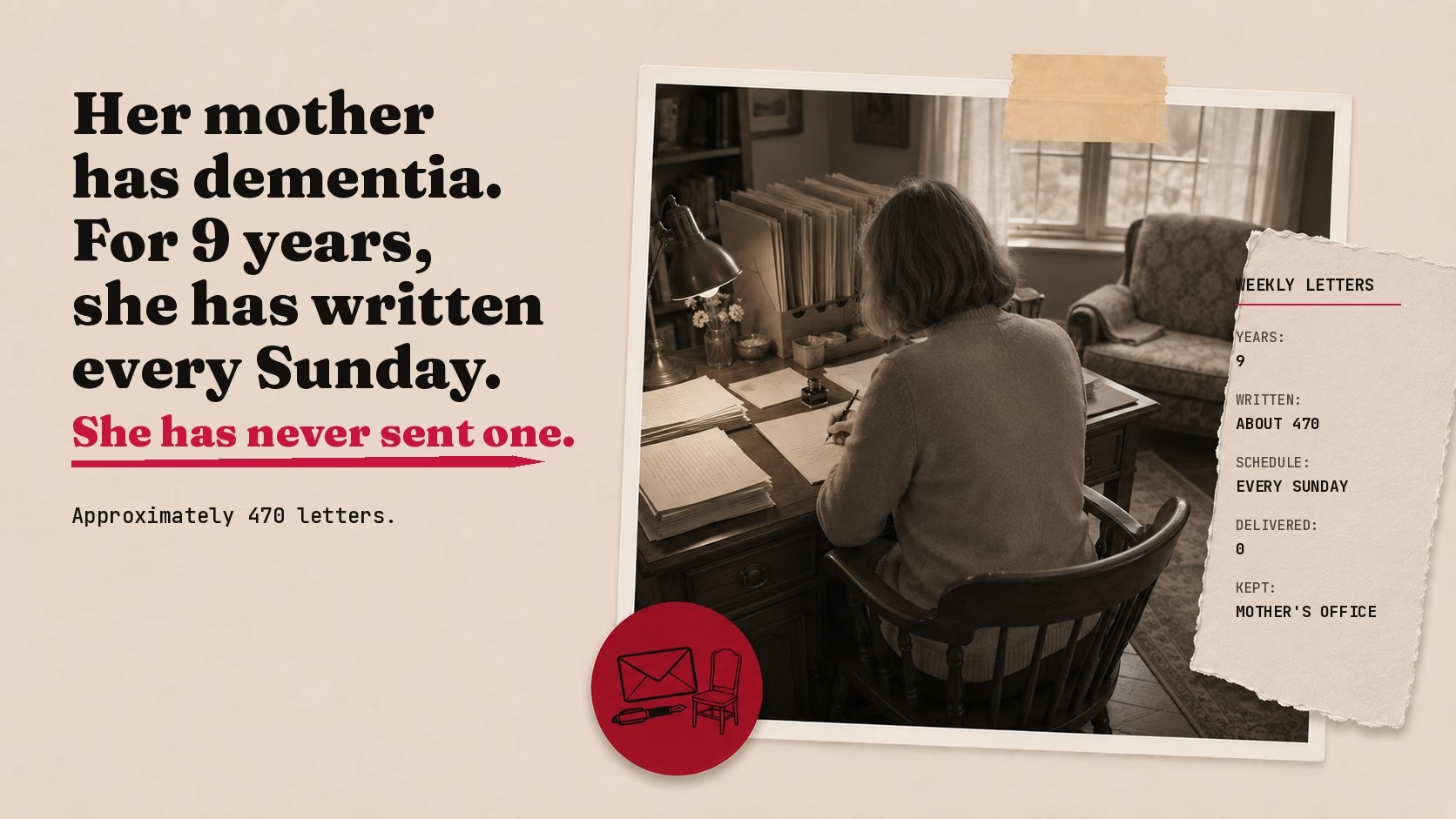
Her mother has dementia. She has been writing weekly letters to the version of her mother who is no longer available, for nine years.
This is a story about a woman in Ann Arbor, Michigan, her mother — who is, at the time of this writing, seventy-nine years old and living in a specific memory care facility on the west side of the city — the specific version of that mother that the specific mother no longer is, and the specific weekly practice the woman has quietly sustained on behalf of the specific unavailable version for the past nine years.
The woman — I will call her Antonia, because she chose the name, and because when I asked why, she said, “It is the name of a person who is doing a specific thing that she is not, in the specific way of the thing, entirely sure she should be doing, which I have decided is what I am,” which I found accurate — is fifty-two. She is a copy editor at a specific university press in Ann Arbor. She has worked there for twenty-six years. She has been married for twenty-four years. She has one adult daughter, who is twenty-one, and who is, at the time of this writing, in her third year at a specific university on the West Coast.
Her mother — she has asked me to call her Ida — is, at the time of this writing, seventy-nine years old. Ida was, before the onset of her dementia, a specific retired public defender who had, in her professional life, spent thirty-eight years representing specific indigent defendants in Michigan’s Third Judicial Circuit. She had been, in Antonia’s careful account, “one of the specifically most articulate people I have ever known. She was the specific kind of person who chose her words with specific care. She was, in the specific way of her professional life, someone who had been paid, for four decades, to say specific things that specific vulnerable people needed her to say on their behalf. She was, in the specific way of her private life, someone who had — over the specific fifty-two years I had, at that point, known her — said specific careful things to me at every specific moment I needed her to say them.”
Ida’s dementia — which is, in the specific medical way of Ida’s specific diagnosis, a specific variant of early-onset Alzheimer’s disease — began, in Antonia’s careful account, approximately eleven years ago.
Antonia has told me: “My mother began to lose her specific ability to say the specific things she wanted to say, in the specific way of her specific dementia, in the specific fall of 2015. She was, at that point, sixty-eight. The specific first symptoms were, in the specific way of the specific disease, small. She would, in the specific ordinary course of a specific conversation, occasionally lose the specific word she was reaching for. She would, in the specific way of her specific ordinary way of speaking, briefly pause. She would, in the specific way of a specific person who has, over the specific previous six decades of her adult life, been extraordinarily specifically articulate, be visibly frustrated by the specific loss of the specific word.”
She has told me: “The specific pauses became, over the specific course of the specific two years that followed, more frequent. The specific frustrations became, in the specific way of the specific disease, more visible. By the specific spring of 2017, she was — in the specific way of the specific dementia — no longer able to have a specific conversation of the specific type she had, over the specific previous six decades of her adult life, been having with specific people.”
She has told me: “By the specific fall of 2017, she was no longer able to write her specific weekly letters to me.”
The specific weekly letters
I want to describe the specific weekly letters, because they are the specific practice that this story is centered on — even though the letters at the specific center of the story are not, in the strict sense, the specific letters Ida wrote to Antonia, but the specific letters Antonia has, in the nine years since, been writing in return.
Ida had, in Antonia’s careful account, been writing Antonia a specific weekly letter every specific Sunday for approximately thirty-one years.
Antonia has told me: “My mother began writing me weekly letters in the specific fall of 1986, when I left home for college. She had, at that specific point, decided — in the specific way of my mother — that she would, in the specific way of a specific mother whose specific daughter had just left for the specific first time, write me a specific letter every specific Sunday for the specific duration of my time at college.”
She has told me: “She had, at the specific end of my four years of college, decided — without ever saying so — to continue the specific practice. She continued it, without exception, for the specific thirty-one years between 1986 and the specific fall of 2017.”
She has told me: “The specific letters were, in the specific way of my mother’s specific letters, extraordinary. They contained, in the specific way of her ongoing internal life, the specific version of my mother that my mother was — over the specific thirty-one years — becoming. They contained her specific views on the specific books she was reading. They contained her specific reflections on the specific cases she was working on. They contained her specific commentary on the specific state of the specific world she was living in. They contained her specific reports on my father’s specific ongoing health, on my brother’s specific ongoing family, on my aunt’s specific ongoing marriage. They contained, in the specific way of the specific letters, everything.”
She has told me: “I have, over thirty-one years, saved every single one of them. They are, at the time of this writing, in a specific set of specific boxes in the specific basement of my house. There are approximately sixteen hundred of them. I have not, in the specific way of the specific boxes, read them since my mother stopped writing them.”
She has told me: “I have decided, in the specific way of the specific boxes, that the specific correct time to reread the specific sixteen hundred letters will be — at some specific future point — a specific moment I have not yet, in the specific way, arrived at.”
She has told me: “I have decided that I will, at some specific future point after my mother has died, know when the specific moment has arrived. I have decided that I will, in the specific way of the specific moment, begin at the specific beginning and read them in the specific order she wrote them.”
She has told me: “This is, in the specific way of the specific sixteen hundred letters, the specific plan I have.”
She has told me: “But the specific letters at the specific center of the specific story you are, in the specific way of your specific publication, writing about are not, in the strict sense, the specific sixteen hundred letters my mother wrote to me.”
She has told me: “They are the specific letters I have, over the specific nine years since my mother stopped writing them, been writing in return.”
The specific practice
I want to describe the specific practice carefully, because it is the specific thing Antonia has, in the past nine years, quietly sustained.
The specific practice began, in Antonia’s careful account, in the specific first week of October 2017.
Antonia had, in her own account, gone to visit her parents at their specific house in Ann Arbor on a specific Sunday afternoon. She had, in the specific way of a specific daughter who had — over the specific previous year — been slowly watching her mother’s dementia progress, been in the specific way of a specific daughter who was, in the specific way of the specific dementia, in the specific mourning that begins before the specific person is dead.
She had, in her own account, arrived at the specific house at approximately 2:00 p.m. She had, in her own account, sat with her mother in the specific living room for approximately two hours. She had, in her own account, “watched my mother struggle — in the specific way of the specific dementia at that specific stage — to have a specific ordinary conversation with me about the specific ordinary things that specific mothers and specific daughters ordinarily discuss.”
She has told me: “The specific two hours were, in the specific way of the specific two hours, specifically difficult.”
She has told me she had, at the specific end of the specific two hours, “gone into the specific small home office my mother had used, over her thirty-one years of writing her specific weekly letters, to write them.”
She has told me: “The specific office was, in the specific way of my mother’s ongoing decline, in the specific same state my mother had left it in the specific way of the specific final letter she had, in the specific spring of 2017, been unable to complete.”
She has told me: “There was, on the specific desk, a specific unfinished letter to me. My mother had, in the specific way of her specific attempts to continue the specific practice, been working on it — I believe, based on the specific date on the specific letter — for approximately three weeks. The specific letter contained approximately fifty words. The specific first sentence was, in the specific way of a specific sentence written by a specific person who was, at the specific time of the specific writing, no longer able to write specific letters, incomplete. It read: ‘My darling, I have been thinking about’.”
She has told me the specific sentence had, in the specific way of the specific unfinished letter, no specific ending.
She has told me: “I had, in the specific way of a specific daughter standing in the specific office of her specific mother’s specific unfinished letter, cried for approximately twenty minutes.”
She has told me: “I had then, in the specific way of a specific daughter who did not, in the specific way of the specific moment, know what else to do, sat down at my mother’s specific desk.”
She has told me: “I had, in the specific way of a specific daughter, picked up my mother’s specific pen.”
She has told me: “I had, in the specific way of a specific daughter, written a specific letter.”
The specific letter, in Antonia’s account, had been addressed to Ida.
The specific letter, in Antonia’s account, had been written in the specific way of a specific letter one adult might write to another specific adult about the specific ordinary things of the specific week. It had contained, in Antonia’s account, “the specific ordinary things I would have, in the specific ordinary course of the specific week, wanted to tell my mother — the specific mother she had been six months before, the specific mother I had, for my specific whole life, been telling the specific ordinary things of my specific weeks to.”
She has told me the specific letter had been approximately eleven hundred words long.
She has told me she had, at the specific end of the specific writing, “placed the specific letter in the specific top drawer of my mother’s specific desk.”
She has told me she had, in the specific way of a specific daughter, “gone home.”
She has told me she had, in the specific way of a specific daughter, “returned the specific following Sunday and written another one.”
She has told me she has, in the specific nine years since, been returning every specific Sunday.
The specific room
I want to describe the specific room carefully, because the specific room is the specific place all four hundred and seventy of the specific letters have, over nine years, been quietly accumulating.
The specific room is, in Antonia’s careful description, the specific small home office in the specific back of the specific first floor of the specific house in Ann Arbor that Antonia’s father — who is, at the time of this writing, still alive and living in the specific house — has continued to live in since Ida moved to the specific memory care facility approximately four years ago.
The specific room was, in Ida’s ordinary practice over her thirty-one years of specific weekly letter-writing, the specific room she used exclusively for the specific weekly letters. She did not, in the specific way of her ordinary practice, use the specific room for any specific other purpose. She used it, in the specific way, only on specific Sunday afternoons between the specific hours of 2:00 p.m. and 5:00 p.m., during which she wrote the specific weekly letter.
The specific room contains, in Antonia’s careful description, the following.
It contains a specific small wooden desk that Ida purchased in 1984, two years before the specific weekly letters began. It contains a specific desk chair — a specific old wooden captain’s chair that Ida used, over her thirty-one years of specific weekly letter-writing, exclusively for the specific letter-writing. It contains a specific pen — a specific fountain pen that Ida had, in her own account, been given by Antonia’s father as a specific fortieth-birthday present in 1988. It contains a specific ink well. It contains a specific stack of the specific brand of stationery Ida had, over her thirty-one years, used for the specific weekly letters. It contains a specific desk lamp.
It contains, in the specific top drawer of the specific desk, the specific unfinished letter Ida had, in the specific spring of 2017, been unable to complete.
It contains, in Antonia’s account, approximately four hundred and seventy of the specific letters Antonia has, over the specific nine years since, been writing.
The letters are, in Antonia’s account, kept in a specific set of specific manila folders in a specific specific file cabinet next to the specific desk. Each folder contains the specific letters from one specific year. The specific folders are, in Antonia’s account, labeled — in Antonia’s handwriting — with the specific year and, in some form, the specific approximate month range.
The specific folder at the front of the specific cabinet is, at the time of this writing, the specific folder labeled “2026 (Jan-Jun).”
The specific folder Antonia is, at the time of this writing, in the specific process of filling is the specific folder labeled “2026 (Jul-Dec).”
She has told me: “The specific room is, in the specific way of the specific nine years, my specific relationship with the specific version of my mother who is no longer available. I go to the specific room every specific Sunday afternoon at approximately 2:00 p.m. I write a specific letter to the specific version of my mother who my mother was before her specific dementia. I place the specific letter in the specific folder. I go home.”
She has told me: “I have, in nine years, missed exactly three specific Sunday afternoons. Two of them were, in the specific way of the specific missed Sundays, my daughter’s specific college dropping-off in the specific fall of 2023, which was, in the specific way of the specific dropping-off, on a specific weekend. One of them was, in the specific way of the specific missed Sunday, the specific Sunday of the specific week in which my father was, in the specific way of a specific man in his early eighties, briefly hospitalized for a specific set of specific chest pains that turned out to be, in the specific way, not, in the strict sense, life-threatening.”
She has told me: “I have, in the specific way of the three missed Sundays, gone to the specific room the following Sunday and written two specific letters. I have, in the specific way of the three occasions, not, in the specific way, missed the specific practice.”
What she writes about
I asked Antonia, in the course of three phone conversations, what she writes about in the specific letters.
She has told me: “I write, in the specific way of the specific letters, about the specific ordinary things of my specific week. I write about the specific books I have been reading. I write about the specific work I have been doing at the specific university press. I write about the specific ordinary state of my specific marriage. I write about the specific ordinary state of my specific daughter’s specific life. I write about the specific ordinary state of my specific father’s specific ongoing health, and my specific brother’s specific ongoing family, and my specific aunt’s specific ongoing marriage.”
She has told me: “I write, in the specific way of the specific letters, in the specific voice I would, over the specific ordinary course of the specific weeks, use to speak with my mother — the specific mother she was before her specific dementia — about the specific ordinary things of my specific weeks.”
She has told me: “I write, in the specific way of the specific letters, as though my mother is, in the specific way, still available to hear them.”
She has told me: “I know she is not.”
She has told me: “I write them anyway.”
She has told me: “I have, over nine years, developed a specific sense of the specific voice my mother would, if she were, in the specific way, still available to hear them, use in response. I have developed a specific sense of what my mother would, in her specific ordinary way, say about the specific books I am reading. I have developed a specific sense of what my mother would, in her specific ordinary way, say about the specific things at my specific work. I have developed a specific sense of what my mother would, in her specific ordinary way, say about my daughter.”
She has told me: “I have, in the specific way of the specific practice, been in a specific ongoing internal conversation with the specific version of my mother my mother no longer is.”
She has told me: “This is, in the specific way of the specific practice, what I do.”
She has told me: “I know that this is, in the specific way of the specific practice, an unusual thing to do.”
She has told me: “I have decided, in the specific way of the specific nine years, that the specific unusualness of the specific practice is not, in the strict sense, my concern.”
Why she has never given her mother a letter
I asked Antonia, in each of our three conversations, whether she has ever considered giving one of the specific letters to her mother.
She has told me she has, in the specific way of a specific daughter, considered this question a great deal.
She has told me: “I have, over nine years, considered — many times — whether I should, at some specific point, take one of the specific letters to the specific memory care facility and give it to my mother. I have considered whether I should, at some specific point, take all four hundred and seventy of them. I have considered whether I should, at some specific point, read a specific selection of them out loud to my mother during one of my specific visits.”
She has told me: “I have, over nine years, decided — every time I have considered it — not to do this.”
She has told me the specific reasons are, in her own careful account, the following.
She has told me: “The specific letters are, in the specific way of the specific practice, not addressed to my mother in her specific current form. They are addressed, in the specific way of the specific practice, to my mother in the specific form she was before her specific dementia. My mother in the specific form she was before her specific dementia is, in the strict sense, not, in the specific way, available to receive them. My mother in the specific form she is now is, in the strict sense, a specific different person than the specific person the specific letters are addressed to.”
She has told me: “If I give the specific letters to my mother in her specific current form, I would be, in the specific way, giving them to the wrong specific recipient. I would be giving them, in the specific way, to a specific person who did not, in the strict sense, ask for them. I would be, in the specific way, imposing on my mother in her specific current form the specific ongoing correspondence I have, in the specific way of the specific nine years, been having with the specific unavailable version of her.”
She has told me: “I have decided, over nine years, that this specific imposition would not, in the strict sense, be fair to my mother in her specific current form. My mother in her specific current form has, in the specific way of her specific dementia, her own specific ongoing internal life. She is, in the specific way, a specific different person than the specific person I am, in the specific letters, corresponding with. She has, in the specific way of her specific current form, her own specific things to attend to. She does not, in the specific way, need to be given four hundred and seventy specific letters addressed to a specific person she no longer is.”
She has told me: “The specific letters are, in the specific way of the specific nine years, mine. They are not, in the strict sense, my mother’s — either the specific version of her they are addressed to, or the specific version of her that is still, in the specific way, alive.”
She has told me: “I have decided, over nine years, that the specific correct thing to do with the specific letters is to write them, and to keep them in the specific room, and to not, in the specific way, give them to anyone.”
She has told me: “I have decided that the specific act of writing them, once a week, in the specific room my mother used to write hers, is the specific thing I am doing.”
She has told me: “I have decided that this is, in the specific way, enough.”
What she has come to understand
I asked Antonia, in our final conversation, what she has, over nine years, come to understand about the specific practice.
She has told me she has, over nine years, come to understand several specific things.
She has told me the first thing is the following.
She has told me: “I have come to understand, over nine years, that the specific practice is not, in the strict sense, for my mother. The specific practice is for me. My mother is not, in the specific way of her specific dementia, in the specific position to benefit from the specific practice. She does not, in the specific way, know it is happening. She does not, in the specific way, need it to be happening.”
She has told me: “I am the specific person who needs it to be happening. I have, over nine years, needed to continue to be in a specific ongoing relationship with the specific version of my mother my mother no longer is. I have needed to continue to tell her the specific ordinary things of my specific weeks. I have needed to continue to hear, in the specific way of my ongoing internal conversation, the specific voice she would, if she were available, use to respond.”
She has told me: “The specific practice is, in the specific way of the specific nine years, the specific way I have kept her, in some specific form, ongoing in my specific ordinary weekly life.”
She has told me the second thing is the following.
She has told me: “I have come to understand, over nine years, that the specific practice is not, in the strict sense, dishonest. I do not, in the specific way of the specific practice, believe that my mother is, in the specific way, still available. I know that she is not. I know that she is, in the specific way of her specific dementia, in a specific different form. I know that the specific letters are, in the specific way of the specific letters, being written to a specific version of my mother that no longer, in the strict sense, exists.”
She has told me: “But I have come to understand, over nine years, that the specific version of my mother that no longer, in the strict sense, exists is nonetheless, in the specific way of my ongoing internal life, still, in the specific way of me, present. The specific version of my mother my mother was for the specific fifty-two years I knew her before her specific dementia is, in the specific way, still with me. I still, in the specific way, know her specific voice. I still, in the specific way, know her specific opinions. I still, in the specific way, know how she would, in the specific way of her specific ordinary way, respond to the specific ordinary things of my specific ordinary weeks.”
She has told me: “The specific letters are, in the specific way of the specific practice, being addressed to the specific version of my mother that is, in the specific way, still with me. She is not, in the specific way, with my father in the specific same way. She is not, in the specific way, with my brother in the specific same way. She is not, in the specific way, with the specific staff at the specific memory care facility in any way. She is, in the specific way of the specific practice, only with me.”
She has told me: “I have come to understand, over nine years, that the specific practice is the specific way I have kept her — the specific version of her that is still with me — in the specific way of a specific ongoing relationship.”
She has told me the third thing is the following.
She has told me: “I have come to understand, over nine years, that the specific practice will, at some specific future point, end. My mother will, in the specific way of her specific dementia and her specific age, at some specific future point die. The specific version of her that is, in the specific way, still with me will, at that specific future point, undergo — in the specific way of the specific grief that follows the specific death of a specific parent — a specific change. I do not, in the strict sense, know what the specific change will be. I know only that the specific change will be, in the specific way, significant.”
She has told me: “I have come to understand, over nine years, that when my mother eventually dies, I will, in the specific way, take the specific letters out of the specific file cabinet. I will, in the specific way, take them home. I will, in the specific way, place them in the specific set of specific boxes in my specific basement, next to the specific sixteen hundred letters my mother wrote to me.”
She has told me: “I will not, in the specific way, continue the specific practice.”
She has told me: “I have come to understand, over nine years, that the specific practice is, in the specific way of the specific practice, dependent on my mother being — even in her specific dementia — still alive. The specific practice is, in the specific way of the specific practice, the specific version of the specific ongoing correspondence I would have been having with the specific version of my mother my mother was, if the specific dementia had not, in the specific way, taken the specific ability to have it. The specific practice is, in the specific way, the specific version of the specific ongoing correspondence that has, in the specific way of the specific dementia, become, in the specific way, one-sided.”
She has told me: “When my mother dies, the specific one-sidedness will, in the specific way, become — in the specific way of the specific grief that follows the specific death — something else. It will not, in the specific way, be, in the strict sense, the specific same practice.”
She has told me: “I have come to understand, over nine years, that the specific end of the specific practice will, in the specific way, be the specific proper end. I will, in the specific way of my mother’s specific eventual death, no longer, in the specific way, need to continue writing the specific letters. I will, in the specific way, need to do something else.”
She has told me: “I have not, at the specific time of this conversation, decided what the specific something else will be. I have decided that it will, in the specific way, reveal itself when the specific time comes.”
She has told me: “For now, I continue writing the specific weekly letters.”
What she plans to do next Sunday
I asked Antonia, in our final conversation, what she plans to do on the specific coming Sunday afternoon.
She has told me she has, in the specific way of a specific daughter, been thinking about it.
She has told me: “I plan, in the specific way of the specific practice, to go to my father’s house at approximately 2:00 p.m. on the specific coming Sunday. I plan, in the specific way of the specific practice, to enter the specific room. I plan, in the specific way of the specific practice, to sit at my mother’s specific desk in the specific captain’s chair. I plan, in the specific way of the specific practice, to pick up my mother’s specific fountain pen.”
She has told me: “I plan, in the specific way of the specific practice, to write a specific letter to my mother about the specific ordinary things of this specific week.”
She has told me she has, in the specific way of the specific week, “been thinking about a specific book I have, in the specific way of my specific work, been reading — a specific novel that has, in the specific way of the specific novel, been reminding me of a specific novel my mother had, in the specific way of her ongoing literary attention, been reading in the specific spring of 2015, six months before the specific first small signs of her specific dementia appeared.”
She has told me: “I plan, in the specific way of the specific letter, to tell my mother about the specific book I have been reading. I plan, in the specific way of the specific letter, to note the specific way it has been reminding me of the specific novel she was reading in the specific spring of 2015. I plan, in the specific way of the specific letter, to say the specific things I know she would, if she were, in the specific way, still available, want me to say to her about the specific way the specific two books have been, in the specific way of my ongoing internal life, in a specific quiet conversation with each other.”
She has told me: “I plan, in the specific way of the specific practice, to place the specific letter in the specific folder labeled ‘2026 (Jul-Dec).’ I plan, in the specific way of the specific practice, to go home.”
She has told me: “I plan, in the specific way of the specific practice, to keep going.”
She has told me: “I have decided, in the specific way of the specific nine years, that this is what I do.”
What this is
I have, in the weeks since I first heard this story, thought about the specific ways that certain adult children of certain specific parents with specific dementia will develop specific quiet ongoing practices for continuing to be, in some specific form, in relationship with the specific version of the specific parent the specific dementia has, in the specific way of the specific dementia, taken. Antonia did not, in the strict sense, decide in the specific fall of 2017 that she would spend the specific coming nine years quietly writing a specific weekly letter to the specific unavailable version of her mother. She had, in the specific way of the specific first Sunday, only sat down at her mother’s specific desk and — for reasons she has told me she has, over nine years, never been able to fully articulate — written one specific letter.
The specific practice grew, over nine years, from the specific first letter into the specific ongoing practice it now is. It grew because Antonia continued, every specific Sunday, to return to the specific room. It grew because the specific practice was, in the specific way of the specific practice, doing something for Antonia that could not, in the specific way of Antonia’s specific ongoing life, be done by any other specific practice.
The specific practice is, in the specific way of the arrangements this publication has been describing, a specific quiet act of care sustained by a specific person, over a specific long period of time, in the specific absence of anyone asking her to sustain it. It is being sustained by a specific daughter, in a specific small home office in a specific house in Ann Arbor, every specific Sunday afternoon, in the specific way of a specific practice that has, in the specific way of the specific nine years, become her specific ongoing relationship with the specific version of her mother her mother no longer is. It is being sustained in the specific absence of the specific recipient of the specific letters. It is being sustained, in the specific way, entirely for the specific benefit of the specific sender.
I do not know exactly what to make of this. I think it is, in the specific way of the practices this publication has been documenting, a specific version of care that is not, in the strict sense, addressed to any specific person who is, in the specific way, still available to receive it. It is a specific version of care addressed to a specific memory, or to a specific ongoing internal relationship, or to a specific version of a specific parent that a specific adult child has quietly decided is worth continuing to be in relationship with. I think it is, in the specific way of certain forms of grief that begin before the specific person is dead, extraordinary. (For a related earlier piece on the specific ways that certain people develop specific ongoing practices to continue to be in relationship with specific other people they have, in some form, lost, see the Wattalife story about the woman in Duluth who has, for seventeen years, been quietly maintaining her late brother’s woodworking shop in the garage of the house she inherited from their parents.)
Antonia told me, at the end of our final conversation, that she had, the previous Sunday, gone to her father’s house at approximately 2:00 p.m.
She had, in her own account, sat in her mother’s specific captain’s chair. She had, in her own account, picked up her mother’s specific fountain pen. She had, in her own account, written a specific letter that had, in her own account, been approximately eleven hundred and forty words long.
She has told me she had, in the specific way of the specific letter, told her mother about the specific book she had been reading. She had, in the specific way of the specific letter, told her mother about the specific ways the specific book had been reminding her of the specific novel her mother had been reading in the specific spring of 2015. She had, in the specific way of the specific letter, said the specific things she knew her mother would, if she were available, want her to say.
She has told me she had, at the specific end of the specific writing, placed the specific letter in the specific folder labeled “2026 (Jul-Dec).”
She has told me she had, in the specific way of the specific practice, gone home.
She has told me she plans to do the same thing on the specific coming Sunday.
She has told me she plans, in the specific way of the specific practice, to continue for the specific remainder of her mother’s specific life — however long the specific remainder turns out to be.
She has told me: “I have decided, over nine years, that this is the specific version of the ongoing relationship I have with my mother. I have decided that the specific practice is, in the specific way of my ongoing life, the specific most important thing I do.”
She has told me: “I have decided that this is, in the specific way of the specific nine years, enough.”
—
Margot Hale is the editor of Wattalife. She has, since reporting this story, been considering the specific ways that certain specific ongoing relationships in her own life have — over the years — quietly changed shape without her having made a specific decision about the change. She has identified two of them. She has decided, tentatively, that she has not yet, in the specific way of a specific person who has just spoken with Antonia, developed the specific quiet ongoing practices that these two specific changed relationships might, in some specific way, benefit from. She has decided, tentatively, to consider whether there is one she should begin.