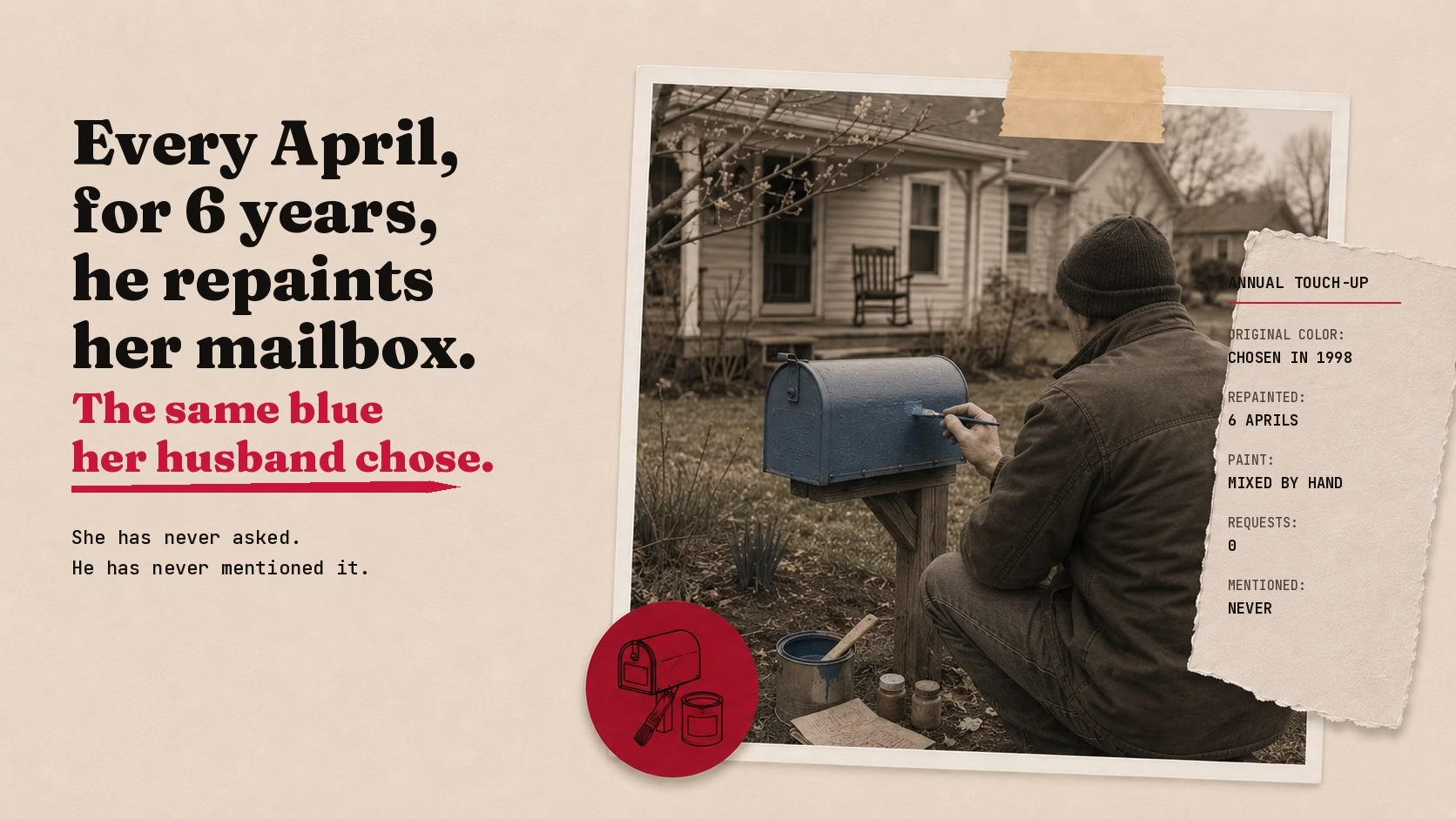
Every April for six years, he has quietly repainted his elderly neighbor’s mailbox in the specific blue her late husband picked in 1998.
This is a story about a man in a small town in eastern Iowa, the small blue mailbox on the specific wooden post across the street from his house, the specific elderly widow who lives at the specific address the specific mailbox belongs to, and the specific quiet practice he has, over the past six years, sustained on behalf of the specific mailbox every April.
The man — I will call him Merle, because he chose the name, and because when I asked why, he said, “It is the name of a person who has decided, without any particular reason he can explain, to do a specific small quiet thing every year, which I have decided is what I am,” which I found accurate — is fifty-six. He works as the specific service manager at a specific small farm-equipment dealership in the specific small town in eastern Iowa where he has lived for the entirety of his adult life. He has been at the specific dealership for thirty-one years. He is married to his wife of twenty-nine years. He has two adult sons, one of whom has moved to Chicago and one of whom has, in the specific way of a specific younger son of a specific rural Iowa family, stayed in the specific town.
The elderly widow — she has asked me to call her Ruthie, because it is what her late husband called her — is, at the time of this writing, eighty-three years old. She has lived, since 1971, in the specific small white house directly across the street from Merle’s. She has been widowed since April of 2020.
She and Merle are not, in the strict sense, friends.
They are, in the specific way of the specific small town in eastern Iowa where they both live, specifically friendly neighbors. They wave at each other from their respective yards. They exchange, in the specific way of the specific neighbors who have lived across the street from each other for the specific twenty-three years since Merle and his specific wife moved into the specific house directly across from Ruthie’s, small brief conversations approximately once a month — about the specific weather, the specific state of a specific tree in front of Ruthie’s house that has, over the years, occasionally required attention from the specific town’s forestry department, and the specific occasional news items concerning specific mutual acquaintances in the specific small town.
They are not, in the strict sense, close.
They have not, in the strict sense, ever discussed the specific mailbox.
The specific mailbox
I want to describe the specific mailbox carefully, because it is the specific object this story is centered on.
The specific mailbox, in Merle’s careful account, is a specific standard size galvanized steel mailbox mounted on a specific wooden post that Ruthie’s late husband — whom I will call Norman, because it was his name — installed in the specific spring of 1998.
Norman had, in Merle’s account, installed the specific mailbox and the specific post over the course of a specific Saturday afternoon in April of 1998. Merle had, at the time, been living in his specific house for approximately three months. He had, on the specific Saturday afternoon in question, been across the street, in his own specific front yard, mowing the specific grass. He had, in his own account, watched Norman install the specific mailbox from across the specific street.
Norman had, in Merle’s account, spent approximately three hours on the installation. He had, in Merle’s account, “worked in the specific slow careful way of a specific man in his specific late fifties who had, over the specific years, developed the specific practice of doing specific small home-improvement projects specifically well.”
Norman had, at the specific end of the specific installation, painted the specific mailbox a specific shade of blue.
The specific shade of blue, in Merle’s careful account, was not, in the strict sense, a standard shade. It was, in Merle’s account, “a specific version of the specific color that certain kinds of specific American house paints will, in the specific way of the specific mixing, produce when a specific person has taken a specific standard base paint and added, in the specific way of a specific practical man doing his own specific mixing, a specific set of specific tinting agents in specific proportions the specific person has, in the specific way, worked out on his own.”
Merle has told me: “I did not, at the specific time, know what the specific shade of blue was. I only knew it was a specific specific shade. It was, in the specific way of a specific shade, immediately recognizable as Norman’s specific shade — the specific shade of a specific mailbox that had, in the specific way of the specific installation, been painted by Norman on a specific Saturday afternoon in April of 1998.”
Merle has told me the specific mailbox had, over the twenty-two years between the specific spring of 1998 and the specific spring of 2020, been repainted by Norman, in the specific way of Norman’s specific ongoing maintenance of it, every specific April.
Merle has told me: “Norman would, in the specific way of his specific ongoing maintenance, repaint the specific mailbox every specific April. He would do it, in the specific way of his specific practice, on a specific Saturday afternoon during the specific second or third week of April. He would take, in the specific way of his specific practice, approximately two hours. He would, in the specific way of his specific practice, mix a specific new small batch of the specific specific shade in his specific garage, in the specific way of a specific man who had, over the specific years, developed the specific recipe he needed.”
Merle has told me: “The specific mailbox was, over the specific twenty-two years, always the specific same shade of blue. It was, in the specific way of the specific twenty-two years, Norman’s specific mailbox.”
Merle has told me: “It was, in the specific way of the specific small town, one of the specific small quiet features of the specific street.”
The specific week in April 2020
I want to describe the specific week in April 2020 carefully, because it is the specific week that the specific practice this story is about began.
Norman had, in Merle’s account, died on the specific first Sunday of April 2020. He had died in his specific sleep, at the specific age of seventy-nine, in the specific bed he had, over the specific forty-nine years of his marriage to Ruthie, slept in. His death was, in the specific way of the specific circumstances, not, in the strict sense, unexpected. Norman had, in Merle’s careful account, “been in the specific way of a specific man in his specific late seventies with a specific set of specific ongoing minor health issues, in the specific way of a specific man whose specific eventual death was not, in the strict sense, going to be a specific surprise. But the specific specific timing was, in the specific way of specific deaths, still, in the strict sense, its own specific version of a specific surprise.”
Merle has told me that on the specific Wednesday following Norman’s specific death — a specific Wednesday in the specific first week of April 2020 — Ruthie had, in the specific way of a specific widow who had just lost her specific husband, come across the street to Merle’s house.
She had, in Merle’s careful account, been holding a specific small piece of paper.
She had, in Merle’s careful account, “stood on my specific front porch and, in the specific way of a specific woman who has just lost her specific husband and is, in the specific way, still, in the strict sense, at the specific stage of grief at which specific practical matters are being attended to, said the following.”
She had said, in Merle’s account: “Merle. I have found something in Norman’s garage. It is, in the specific way of Norman’s specific handwriting, a specific piece of paper containing a specific recipe. The specific recipe is, in the specific way of Norman’s specific handwriting, labeled ‘Mailbox Blue.’ The specific recipe is, in the specific way of Norman’s specific handwriting, specific. I do not, in the strict sense, know what to do with it. I am not, in the specific way of a specific woman my age, going to be, in the strict sense, in the specific position of repainting the specific mailbox myself. I would like — I do not, in the strict sense, know why I am asking you this, but I would like to ask — I would like to ask if you would be willing to take the specific recipe. I would like you to take it in case, at some specific future point, the specific mailbox needs to be, in the specific way of the specific mailbox, repainted.”
Merle has told me he had, at the specific moment, taken the specific piece of paper.
He has told me: “I did not, at the specific moment, know what specifically I was agreeing to. I only knew that Ruthie was, in the specific way, asking me — the specific way of a specific woman who had just lost her specific husband and was, in the specific way, standing on my specific front porch trying to hand me a specific piece of paper — to take it. I took it. I said, in the specific way of a specific person accepting a specific small responsibility he did not, in the strict sense, understand, that I would keep the specific recipe safe.”
He has told me Ruthie had, at the specific moment, said the following: “Thank you. That is all I wanted to ask.”
He has told me Ruthie had then, in his own account, walked back across the street.
He has told me the specific piece of paper is, at the time of this writing, in a specific small folder in the specific top drawer of his specific desk in his specific home office. He has, in the specific way of the specific six years, kept it there.
He has told me the specific recipe is, in Norman’s specific handwriting, written on a specific small piece of paper that is, in the specific way of the specific paper, torn from what appears to be a specific old Ace Hardware notepad.
The specific recipe, in Merle’s account, reads the following:
“MAILBOX BLUE
1 quart Sherwin-Williams SuperPaint Exterior Satin base white
2 oz Colonial Blue tinting agent
1/2 oz true black tinting agent
1/4 oz raw umber tinting agent
Stir slow. Add tints one at a time. Mix ten minutes each. Should look like the sky at 6:30 in the morning in May.
Every April. Second or third Saturday. Two coats.
—N. April 4, 1998″
Merle has told me: “The specific recipe is, in the specific way of the specific recipe, specifically Norman. The specific instruction ‘should look like the sky at 6:30 in the morning in May’ is, in the specific way of Norman’s specific ordinary way of describing specific things, exactly the specific way Norman would, in the specific way of Norman, describe a specific shade of blue.”
He has told me: “The specific recipe is, in the specific way of the specific recipe, the specific most careful piece of information I have ever been given by a specific person who did not, at the specific time of the giving, know that he was, in the strict sense, giving it to me.”
The specific first year
I want to describe the specific first year of the specific practice — the specific April of 2020, the specific first April after Norman’s death — because it is the specific year that established the specific pattern of everything that followed.
Merle has told me the specific mailbox had, in the specific ten days between Norman’s death and the specific second Saturday of April, already begun — in the specific way of the specific weather in eastern Iowa in the specific spring — to show the specific small signs of the specific fading that Norman had, in his specific ongoing maintenance, been preventing for the specific twenty-two previous years.
He has told me: “The specific mailbox was, in the specific way of the specific fading, not, in the strict sense, in bad condition. But it was, in the specific way of a specific mailbox that had gone approximately eleven months since its specific last coat of paint, in the specific way of a specific mailbox that needed, in the specific way of Norman’s specific ongoing practice, its specific annual repainting.”
He has told me: “I had, in the specific way of a specific person who had just been given a specific handwritten recipe by a specific widow, thought about the specific mailbox for approximately six days.”
He has told me: “I had, at the specific end of the specific six days, decided the following.”
He has told me: “I had decided that the specific most useful thing I could do with the specific recipe Ruthie had given me was, in the specific way of the specific recipe, use it.”
He has told me he had, in the specific way of a specific person acting on a specific decision, driven to the specific Ace Hardware in the specific small town on a specific Saturday morning in the specific second week of April 2020. He had, in the specific way of the specific decision, purchased the specific base paint the specific recipe called for, along with the specific tinting agents in the specific amounts the specific recipe specified.
He had, in the specific way of the specific decision, driven home. He had, in the specific way of the specific decision, gone into his own specific garage. He had, in the specific way of the specific decision, mixed the specific paint according to the specific recipe.
He has told me: “The specific paint, when I had finished the specific mixing, was — in the specific way of Norman’s specific description — approximately the specific shade of the specific sky at 6:30 in the morning in May. It was, in the specific way of the specific shade, the specific same specific shade of blue the specific mailbox had, over the specific twenty-two years, always been.”
He has told me: “It was, in the specific way of the specific shade, Norman’s specific mailbox blue.”
He has told me he had, in the specific way of a specific man mixing paint in his specific garage on a specific Saturday morning in April, “briefly cried.”
He has told me: “I do not, in the specific way of a specific man in his specific late forties who has just mixed a specific paint by following a specific recipe written by a specific dead man, know exactly why I cried. I know only that the specific shade of blue, when it had, in the specific way of the specific mixing, appeared in the specific paint can, had been — in the specific way of the specific shade — specifically Norman.”
He has told me: “The specific shade of blue had been, in the specific way of the specific mixing, the specific piece of Norman that I had, in the specific way of the specific recipe, been given by his specific widow the specific week before.”
He has told me: “I had, in the specific way of the specific moment, understood — in some specific quiet way I could not fully articulate — that the specific paint I had just mixed was, in the specific way of the specific paint, one specific thing Norman had, without knowing he was doing it, left behind.”
He has told me he had, at the specific end of the specific brief crying, put the specific lid back on the specific paint can. He had, in the specific way of a specific man carrying a specific paint can, walked across the specific street to Ruthie’s house.
He has told me: “I had, in the specific way of a specific person carrying a specific paint can to a specific widow’s specific house, considered — in the specific way — whether I should knock on the specific door and, in the specific way, tell Ruthie what I was about to do.”
He has told me: “I had, in the specific way of the specific consideration, decided against knocking. I had decided that knocking would, in the specific way of the specific moment, force Ruthie into a specific conversation about the specific mailbox that she had not, in the strict sense, asked for. She had, in the specific way of the specific handing over of the specific recipe the specific week before, given me the specific responsibility for the specific mailbox. She had, in the specific way of the specific giving, released herself from the specific ongoing consideration of the specific mailbox. I had, in the specific way of the specific giving, accepted the specific responsibility. I did not, in the specific way of the specific responsibility, need to, in the strict sense, involve Ruthie in the specific execution of it.”
He has told me: “I had, in the specific way of the specific decision, walked to the specific mailbox. I had, in the specific way of the specific decision, unscrewed the specific mailbox from the specific post. I had, in the specific way of the specific decision, carried the specific mailbox and the specific paint can back across the street to my own specific garage.”
He has told me he had, in the specific way of a specific person following a specific set of specific instructions written by a specific dead man he had known specifically as a specific neighbor for twenty-two years, painted the specific mailbox two specific coats in the specific specific shade of blue.
He has told me the specific painting had, in his own account, taken approximately two and a half hours.
He has told me he had, at the specific end of the specific painting, allowed the specific paint to dry for approximately six hours.
He has told me he had, at the specific end of the specific six hours, carried the specific mailbox back across the specific street. He had, in the specific way of a specific person restoring a specific mailbox to its specific proper place, screwed the specific mailbox back onto the specific post.
He has told me he had, in the specific way of a specific person, walked back across the street to his own specific house.
He has told me he had, in the specific way of a specific person, not, in the strict sense, mentioned the specific painting to Ruthie.
He has told me Ruthie has, in the specific way of the specific six years, never, in the strict sense, mentioned the specific painting to him.
The specific five years since
I asked Merle, in the course of three phone conversations, what has happened in the specific five years since the specific first April.
He has told me the specific practice has, in the specific way of the specific years, continued.
He has told me: “I have, in the specific way of the specific practice, repainted the specific mailbox every specific April. I have, in the specific way of the specific practice, followed the specific same specific procedure. I have, in the specific way of the specific practice, driven to the specific Ace Hardware in the specific second week of April. I have purchased the specific base paint and the specific tinting agents. I have mixed the specific paint according to Norman’s specific recipe. I have, in the specific way of the specific practice, gone across the street. I have unscrewed the specific mailbox. I have carried it back to my specific garage. I have painted it two specific coats. I have, in the specific way of the specific practice, allowed it to dry. I have carried it back. I have, in the specific way of the specific practice, screwed it back onto the specific post.”
He has told me: “I have, in the specific way of the specific practice, done this in the specific way of Norman’s specific ongoing maintenance — on a specific Saturday afternoon in the specific second or third week of April, over approximately two and a half hours, with two specific coats.”
He has told me: “I have, in the specific way of the specific practice, never, in the strict sense, mentioned it to Ruthie.”
He has told me: “Ruthie has, in the specific way of the specific six years, never, in the strict sense, mentioned it to me.”
He has told me: “The specific mailbox has, in the specific way of the specific six years, always been the specific shade of blue it has always been.”
He has told me he has, in the specific way of the specific practice, thought about the specific arrangement a great deal.
He has told me: “I have, in the specific way of a specific person, occasionally considered whether Ruthie knows that I have been doing the specific painting. I have considered, in the specific way of the specific consideration, several specific possibilities.”
He has told me the specific possibilities include the following.
He has told me: “One possibility is that Ruthie does not, in the strict sense, know I have been doing the specific painting. That the specific mailbox is, in her specific ordinary way of looking at it, simply, in the specific way, still there. That she has not, in the specific way of a specific woman in her specific late seventies and now specific early eighties, been in the specific way of noticing that the specific mailbox is, in the specific way, being repainted every April.”
He has told me: “This possibility is, in the specific way of the possibility, unlikely. Ruthie is, in the specific way of a specific woman who has lived in her specific house for fifty-five years, a specific specific noticer of the specific small ordinary things around her specific house. She would, in the specific way of her ordinary noticing, notice.”
He has told me: “A second possibility is that Ruthie knows I have been doing the specific painting, but has decided — in the specific way of a specific woman who has been widowed since April of 2020 — that the specific correct response to my specific ongoing painting is to, in the specific way, not mention it. That she has decided, in the specific way, to receive the specific ongoing painting in the specific same specific way she gave me the specific recipe — quietly, without ceremony, without the specific conversation that a specific mention would, in the specific way, produce.”
He has told me: “This possibility is, in the specific way of the possibility, most likely.”
He has told me: “A third possibility is that Ruthie has, in the specific way of the specific six years, forgotten that she gave me the specific recipe. That she has, in the specific way of a specific woman in her specific eighties, become, in the specific way, aware only of the specific fact that the specific mailbox is, in the specific way of the specific mailbox, always the specific shade of blue it has always been. That she has, in the specific way, ceased to notice the specific mechanism by which this is, in the specific way, the case.”
He has told me: “This possibility is, in the specific way of the possibility, possible.”
He has told me: “I have decided, in the specific way of the specific six years, that I do not, in the strict sense, need to know which possibility is correct. I have decided that the specific practice is, in the specific way of the specific practice, being sustained by me on behalf of Norman for the specific benefit of Ruthie. I have decided that the specific practice does not, in the strict sense, require Ruthie’s specific acknowledgment in order to be, in the specific way, worth doing.”
He has told me: “I have decided that Norman would, if he were in the specific way still alive, want the specific mailbox to continue to be the specific shade of blue it has always been. I have decided that Ruthie would, if she were in the specific way asked, want the specific same specific thing. I have decided that this is, in the specific way of the specific decision, sufficient.”
Why he keeps doing it
I asked Merle, in our final conversation, why he has kept doing it for six years.
He has told me the answer is, in his own careful account, not, in the strict sense, easy to give.
He has told me: “I have, over six years, thought about this. I have not, in the specific way of the specific consideration, arrived at a specific clear answer.”
He has told me the specific reasons he has considered include the following.
He has told me: “I have considered that I keep doing it because Ruthie asked me to. This is, in the specific way of the possibility, true in a specific limited sense. Ruthie did, in the specific way of the specific handing over of the specific recipe, ask me to take responsibility for the specific mailbox. But she did not, in the strict sense, ask me to repaint it every April. She asked me only to keep the specific recipe safe.”
He has told me: “I have considered that I keep doing it because Norman would want me to. This is, in the specific way of the possibility, also true in a specific limited sense. Norman would, I believe, want the specific mailbox to continue to be the specific shade of blue it has always been. But Norman did not, in the strict sense, ask me to keep doing it. Norman did not, in the strict sense, know he was going to die when he died. Norman did not, in the strict sense, ever consider the specific question of who would repaint the specific mailbox after he died.”
He has told me: “I have considered that I keep doing it because I like doing it. This is, in the specific way of the possibility, also true in a specific limited sense. I have, in the specific way of the specific six years, come to enjoy the specific afternoon in the specific second week of April on which I mix the specific paint and repaint the specific mailbox. But this is, in the specific way of a specific reason, not, in the strict sense, sufficient to explain the specific practice. There are many specific things I enjoy doing that I do not, in the specific way, do every year for six years without telling anyone.”
He has told me: “I have considered that I keep doing it because the specific practice has, in the specific way of the specific six years, become — in some quiet way — the specific way I am, in the specific way of the specific practice, taking care of Ruthie without, in the strict sense, taking care of her. Ruthie is, in the specific way of a specific widow in her specific eighties, in the specific way of a specific woman who is, in the strict sense, alone. Her specific children — she has two — live in specific different states. She does not, in the strict sense, need me to, in the specific way, take care of her in any specific ordinary way. She is, in the specific way of a specific woman in her specific eighties, specifically capable.”
He has told me: “But the specific mailbox is, in the specific way of the specific mailbox, a specific small piece of her ongoing life that has, in the specific way of the specific mailbox, continued to be the specific way Norman set it up. The specific mailbox is, in the specific way, one specific small thing about Ruthie’s specific ongoing life that has not, in the specific way, changed since Norman died. I have decided, over six years, that this is, in the specific way, the specific most useful thing I can, in the specific way of a specific neighbor across the street, do.”
He has told me: “I have decided, over six years, that the specific most useful thing I can do for a specific woman I do not, in the strict sense, know well, whose specific husband I did not, in the strict sense, know well, is to keep one specific small thing about her specific ongoing life the specific way her specific husband set it up. I have decided that the specific way of keeping it is by mixing the specific paint from the specific recipe he wrote in the specific spring of 1998, painting the specific mailbox in the specific specific shade of blue he mixed for the specific first time in the specific spring of 1998, on the specific Saturday afternoon in the specific second or third week of April that he, in the specific way of his ongoing practice, always did.”
He has told me: “I have decided, over six years, that this is, in the specific way of the specific decision, the specific correct decision.”
He has told me: “I intend, in the specific way of the specific decision, to continue for the specific remainder of Ruthie’s specific life.”
What he suspects
I asked Merle, at the end of our final conversation, what he suspects Ruthie will do when, at some specific future point, she eventually dies.
He has told me he has, in the specific way of the specific consideration, occasionally thought about it.
He has told me: “I have thought about the specific fact that Ruthie is, at eighty-three, in the specific way of certain specific eighty-three-year-old women, at a specific stage of her life at which certain specific health difficulties are, in the specific way of the specific stage, becoming, in the specific way, more possible.”
He has told me: “I have thought about what will happen to the specific mailbox when Ruthie eventually dies.”
He has told me: “I have decided, tentatively, that when Ruthie eventually dies, the specific mailbox will, in the specific way of the ordinary course of a specific estate, be, in the specific way, part of the specific house. The specific house will, in the specific way of a specific estate, be sold. The specific new owners will, in the specific way of specific new owners, decide what to do with the specific mailbox.”
He has told me: “They may, in the specific way of specific new owners, decide to replace it with a specific new mailbox of their specific own choosing. They may, in the specific way of specific new owners, decide to keep it as it is.”
He has told me: “I do not, in the specific way of the ordinary course of a specific estate, expect to be, in the specific way, involved in the specific decision.”
He has told me: “I have decided that I will, in the specific way of a specific person watching from across the specific street, accept whatever the specific new owners decide.”
He has told me: “I have decided that if the specific new owners keep the specific mailbox, I will not, in the specific way, continue to repaint it. The specific practice is, in the specific way of the specific practice, mine and Norman’s and Ruthie’s. It is not, in the specific way, mine and the specific new owners’. When Ruthie is, in the specific way of her specific eventual death, no longer in the specific house across the street from me, the specific practice will, in the specific way of the specific practice, end.”
He has told me: “I have decided that I will, in the specific way of the specific ending, be, in the specific way, sad. I have decided that the specific sadness will be, in the specific way of the specific sadness, one of the specific ordinary sadnesses of a specific person who has been in a specific specific quiet arrangement with a specific specific quiet neighbor for the specific final years of her specific life.”
He has told me: “I have decided that this is, in the specific way, an acceptable specific ending.”
He has told me: “For now, the specific practice continues.”
He has told me: “The specific mailbox is, at the time of this conversation, in the specific way of the specific mailbox, the specific shade of blue it has always been.”
He has told me: “I intend, in the specific way of the specific eleven months and one week until the specific coming April, to continue to maintain it in the specific specific shade of blue for as long as Ruthie is, in the specific way of Ruthie, still alive.”
What this is
I have, in the weeks since I first heard this story, thought about the specific ways that certain small quiet arrangements between certain specific neighbors can, in the specific way of the specific arrangements, become — over time — the specific ongoing form of a specific kindness that would not, in the specific way of any specific ordinary form of neighborhood interaction, otherwise exist. Merle did not, in any strict sense, decide in the specific first week of April 2020 that he would spend the specific coming six years quietly repainting his specific elderly widowed neighbor’s mailbox every April in the specific specific shade of blue her late husband had, in the specific spring of 1998, mixed for the specific first time. He had, in the specific way of the specific first week of April 2020, only taken a specific piece of paper from a specific woman who was, in the specific way of the specific handing over, in the specific way of the specific first week of her widowhood.
The specific practice grew, over six years, from the specific first small acceptance into the specific ongoing practice it now is. It grew because Merle, in the specific way of a specific person who has been given a specific small responsibility he does not fully understand, continued to enact it every April. It grew because Ruthie, in the specific way of a specific widow who has quietly decided to receive a specific kindness without acknowledging it, continued to allow it to happen. It grew because neither of them, in the specific way of a specific quiet arrangement between two specific neighbors, ever mentioned the specific mechanism by which the specific mailbox continued to be, in the specific way of the specific mailbox, the specific shade of blue it had always been.
The specific practice is, in the specific way of the arrangements this publication has been describing, a specific quiet act of care sustained by a specific person, over a specific long period of time, in the specific absence of anyone asking him to sustain it — or, more precisely, in the specific absence of anyone asking him to sustain it in the specific way he has, over six years, been sustaining it. It is being sustained by a specific man who has, in the specific way of a specific quiet responsibility, decided that the specific small preservation of a specific small piece of a specific woman’s ongoing life is the specific most useful thing he can, in the specific way of a specific neighbor across the street, do. (For a related earlier piece on the specific ways that certain specific quiet arrangements between specific people can be sustained over specific long periods of time without being, in the strict sense, mentioned, see the Wattalife story about the 87-year-old landlord in Providence who, without ever telling his tenant, absorbed fourteen years of unmade rent increases and then, in the last three months of his life, quietly gave her the apartment.)
Merle told me, at the end of our final conversation, that he had, the previous evening, been in his specific home office. He had, in his own account, been going through the specific top drawer of his specific desk looking for a specific unrelated specific piece of paper.
He had, in his own account, come across the specific small folder containing Norman’s specific recipe.
He had, in his own account, taken the specific piece of paper out. He had, in his own account, looked at it for a specific moment.
He had, in his own account, “read the specific line — ‘Should look like the sky at 6:30 in the morning in May.'”
He has told me he had, in his own account, “briefly thought about Norman.”
He has told me he had, in his own account, put the specific piece of paper back in the specific folder. He had put the specific folder back in the specific drawer. He had, in his own account, gone downstairs and had his specific dinner with his specific wife.
He has told me he plans, in the specific way of the specific practice, to be in his specific garage at approximately 1:00 p.m. on the specific second or third Saturday of April 2027.
He has told me he plans, in the specific way of the specific practice, to mix the specific paint according to Norman’s specific recipe.
He has told me he plans, in the specific way of the specific practice, to walk across the specific street.
He has told me: “I plan, in the specific way of the specific practice, to keep doing what I am doing.”
—
Margot Hale is the editor of Wattalife. She has, since reporting this story, been considering whether there are specific small quiet ongoing arrangements between her own specific neighbors that she has, in the specific way of a specific woman who does not always pay attention to the