Her Husband Was the Church Organist
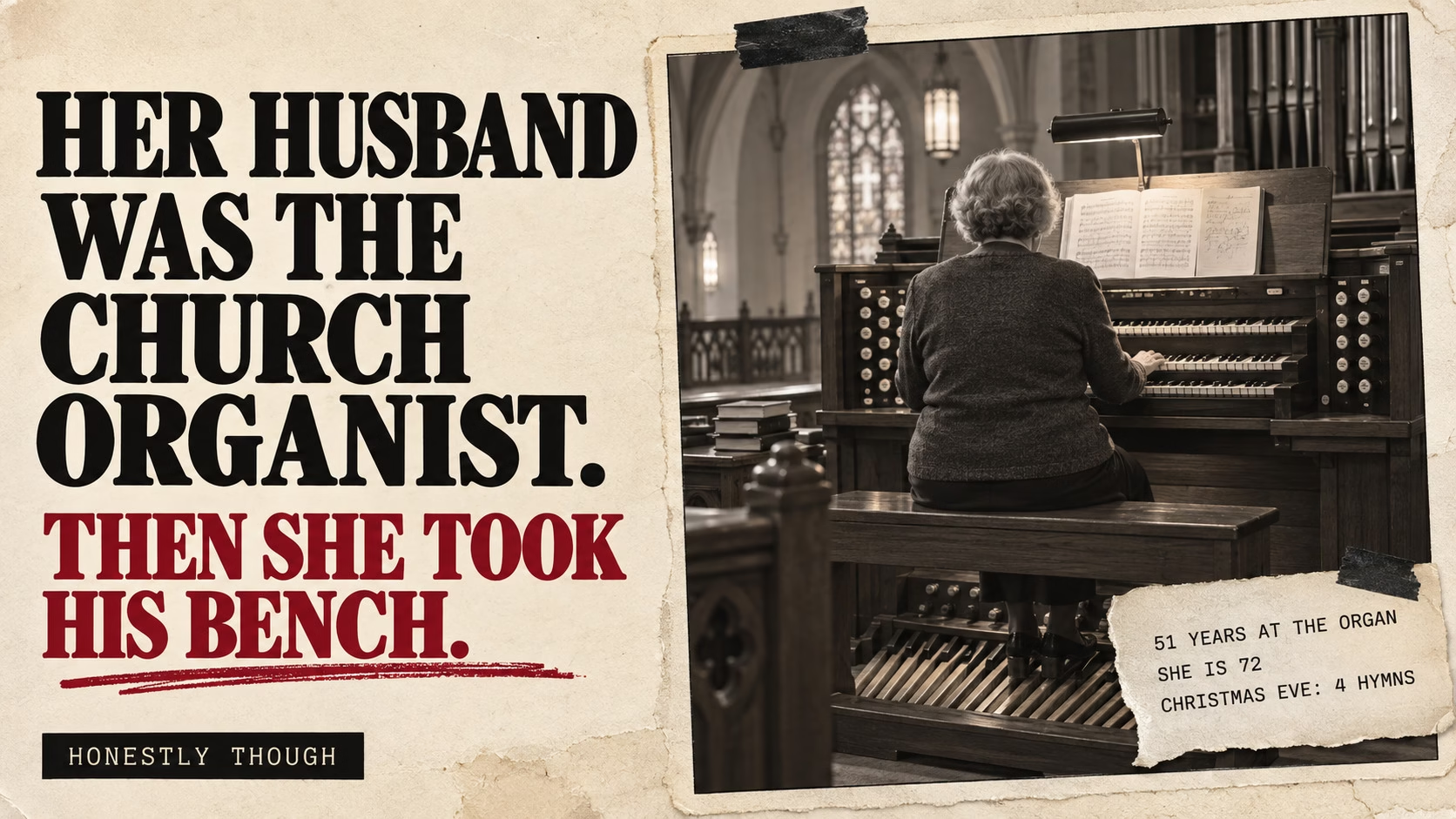
SPOKANE — Walt Prather played the organ at First Lutheran for fifty-one years, which is long enough that nobody at the church could tell you what the room sounded like without him. His wife, Lucille, sat in the third pew on the left, close enough to watch his shoulders. She never learned to play. There was no reason to. The organ was Walt’s, the way the garage was Walt’s, and the crossword, and the good scissors.
Walt died in March. In June, Lucille started learning the organ. She is 72.
Left Hand First
Her teacher is a graduate student named Danny who drives over from the university on Tuesdays and charges her less than he should. He started her on the left hand alone, then the right, and has not yet mentioned the pedals, which sit under the bench like a second, more difficult instrument that somebody left there as a prank.
Lucille practices at the church because an organ does not fit in a house. She lets herself in with Walt’s key, which she wears on a ribbon, and she raises the bench two full turns, because Walt was tall and set it low, and for fifty-one years nobody else’s legs mattered.
His hymnal is still on the rack. He wrote in the margins, in pencil. Slow here. Wait out the coughing. She plays around his handwriting and does not erase anything.
What the Church Did First
When Walt died, the council did what churches do now: it looked into a machine. There is a device that plays hymns through the speakers at the push of a button, in any key, at any tempo, forever. The American Guild of Organists, which tracks the shrinking supply of people who play this instrument, could have told them how the congregation would take it. The congregation took it quietly, which in Lutheran terms is a riot.
The machine did not breathe. That was the complaint, once people found words for it. It never rushed the last verse because the roast was in the oven. It was correct every single time, and the room could feel it, and the room did not sing.
Christmas Eve
Lucille’s goal is one service. Christmas Eve, four hymns, none of them fast. Danny says she’ll be ready for three of them and they will make a decision about “Joy to the World” in November.
She is not good yet. She knows this the way she knows the bench height, exactly. Her tempo wanders. Her left hand still waits for her right one at the ends of lines, like a person holding a door.
But the first Sunday she played — one hymn, offertory, hands only — the congregation sang louder than it had in months. Not because she was good. Because she wasn’t, and they knew it, and a room full of people leaned in at once to carry her through the third verse. A machine cannot make people do that. A widow in the loft, playing her husband’s bench at the wrong height for him and the right height for her, apparently can.
(For a related piece on skills people finally claim for themselves, see the Wattalife story in the archive.)
—
Margot Hale is the editor of Wattalife. Since reporting this, she has made a short list of things she always considered someone else’s, and has started returning the good scissors to the wrong drawer, just to establish jurisdiction.