
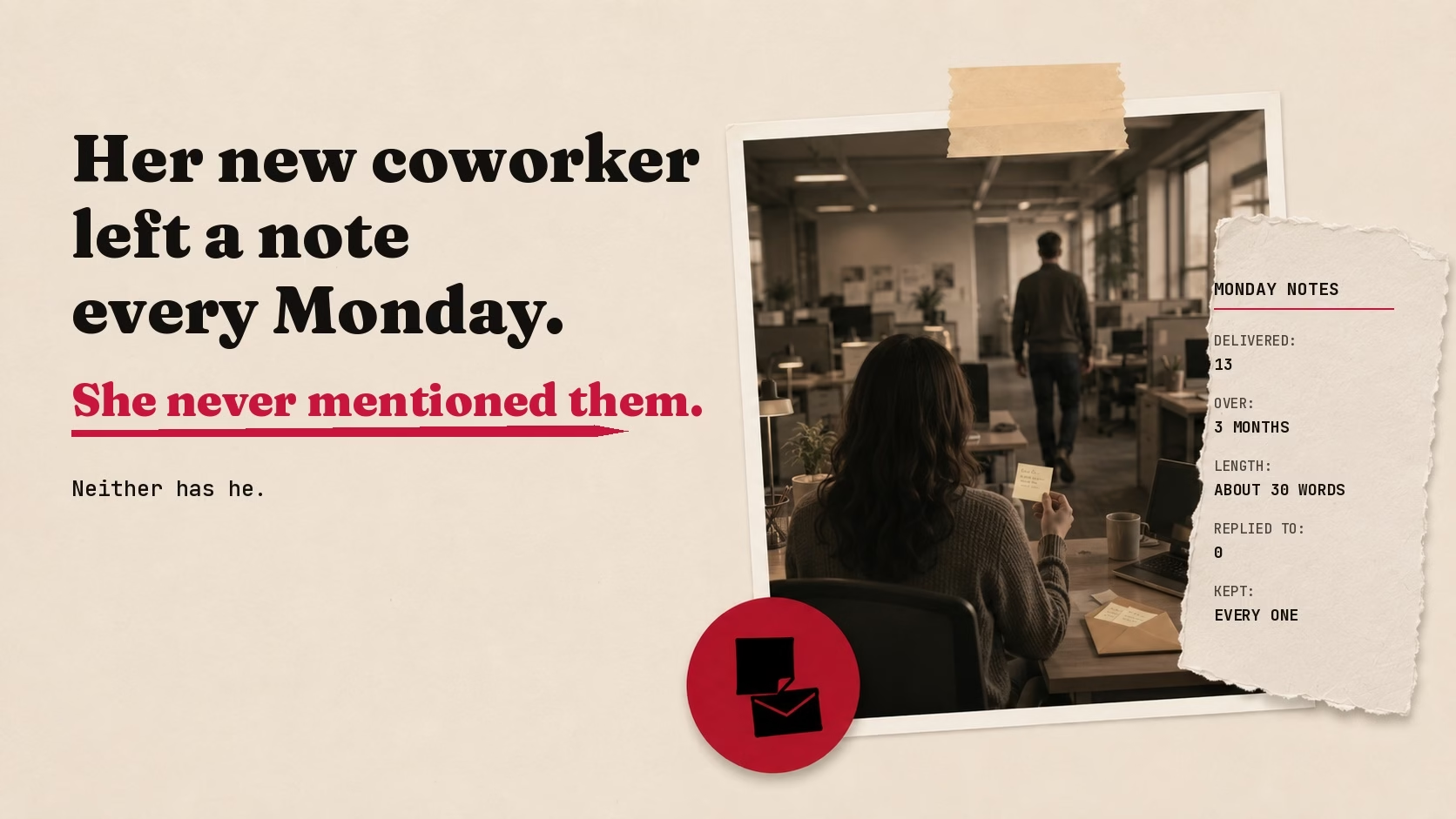
Three months ago, her new coworker started leaving her a specific small note every Monday morning. She has not, in three months, ever mentioned the notes.
This is a story about a woman in Charlotte, North Carolina, the specific mid-sized nonprofit she has worked at for the past nine years, the coworker she barely knows who joined the organization in the second week of April 2026, and the specific set of thirteen small handwritten notes he has, over the past three months, left on her desk every Monday morning.
The woman — I will call her Verity, because she chose the name, and because when I asked her why, she said, “It is the name of a person who has decided, for reasons she is not sure of, to keep something specific to herself,” which I found sufficient — is forty-one. She is the director of communications at a specific mid-sized environmental nonprofit that has, over the past nine years of Verity’s tenure there, grown from approximately twelve employees to approximately thirty-seven. She has been at the organization since she was thirty-two. She has been the director of communications since she was thirty-six.
The coworker — she has asked me to call him Everett, because it is a name he has told her, in a specific brief conversation approximately five months ago, that he had considered naming his own son had he had one — joined the organization in the second week of April 2026 as a specific senior grants writer.
The two of them work, in the specific way of the organization’s small physical office, on the specific opposite sides of the same open-plan floor. Verity’s desk is in the specific corner nearest the window. Everett’s desk is in the specific opposite corner nearest the small kitchenette.
They have, in the strict sense, not gotten to know each other well.
They have, in the strict sense, spoken to each other in extended conversation approximately four times in five months. The four conversations, in Verity’s careful accounting, have covered: the specific organization’s grant reporting deadlines (once, in April), the specific state of a shared printer in the kitchenette (once, in May), the specific policy positions of a specific state senator on a specific environmental issue that was, at the time, in the local news (once, in June), and the specific book Everett had, at the time of the conversation, been reading (once, in July).
Beyond these four conversations, they have exchanged, over five months, perhaps thirty additional brief work-related emails and perhaps forty small in-passing greetings in the hallway or kitchenette.
She does not know his birthday. She does not know where he lives, beyond that it is somewhere in Charlotte. She does not know whether he is married, whether he has children, whether he has hobbies, whether he has, at the current stage of his life, close friends. She knows only what she has been able to observe in the specific way of coworkers who work near each other but do not, in the strict sense, socialize.
She knows one other thing.
Every Monday morning, since the second Monday of May 2026, there has been a specific small handwritten note on her desk when she arrives at work.
The notes are, in every case, from Everett.
She has not, in three months, ever mentioned the notes to him.
He has not, in three months, ever mentioned the notes to her.
The notes
I want to describe the notes carefully, because they are the specific thing this story is about.
The notes are, in Verity’s careful description, written on a specific brand of small square Post-it note. The specific color of the Post-it is a specific pale yellow. The specific size of each note is approximately three inches by three inches.
Each note is, in Verity’s account, written in a specific careful handwriting that she has told me is “specifically legible without being, in the strict sense, showy. It is the specific handwriting of a person who has decided that the person reading the note should be able to read it without effort.”
Each note is, in Verity’s careful accounting, approximately twenty-five to thirty-five words long.
Each note contains, in every case, the following.
It contains, at the top, the specific date. Written in a specific abbreviated form — “5/11,” “5/18,” “5/25,” and so on.
It contains, in the middle, a specific short observation about the previous week. The observations are, in Verity’s careful account, not, in the strict sense, addressed to Verity. They are, in the specific way of the notes, addressed to no one in particular. They are — in Verity’s own careful phrasing — “the specific kind of observation you might make out loud to yourself, on a Monday morning, if you happened to be alone and were thinking about the previous week.”
She has told me a specific selection of the observations, in the following forms.
The first note, dated 5/11 — the specific first Monday she found one on her desk — read the following:
“The specific way the afternoon light was coming into the office on Thursday last week made everyone at their desks look, briefly, like they were in a Vermeer painting. Nobody noticed except me. I noticed.”
The second note, dated 5/18, read the following:
“On Friday, the small dog that lives in the apartment above me was barking for approximately eleven minutes at what turned out to be a specific squirrel on the fire escape. The squirrel was aware. It stayed. I sat on my couch and watched the specific standoff. Neither the dog nor the squirrel won.”
The third note, dated 5/25, read the following:
“I have, over the past week, been thinking about a specific line from a book I read in college. I cannot remember the specific book. I cannot remember the specific line. I remember only that the specific line was, at the time, important to me. This has been bothering me pleasantly.”
The fourth note, dated 6/1, read the following:
“There is a specific woman I see, most mornings, waiting for the bus at the corner of Tryon and Fourth. She wears, without exception, a specific yellow raincoat, regardless of weather. I have decided, without having ever spoken to her, that she is one of the specific most reliable people in Charlotte.”
The notes have, in the ensuing weeks, continued in this specific vein.
Verity has, in her own careful account, saved every single one of them. She has told me they are, at the time of this writing, arranged in chronological order in a specific small manila envelope in the specific top drawer of her desk.
She reads them, in her own account, “on the specific Monday morning I receive them. I read them once, in the specific quiet moment before I begin my workday. I then put them in the envelope. I do not, in the strict sense, reread them during the week. I reread them, in the specific way of the collection, in a specific block on the specific evening of the last day of the month.”
She has told me the specific block reading of the previous month’s notes has, over three months, become “the specific most interesting five minutes of my monthly life.”
She has told me she does not, in the strict sense, know why.
Why she has not mentioned them
I asked Verity, in each of our three conversations, why — in three months — she has not mentioned the notes to Everett.
She has told me she has, over three months, considered this question a great deal.
She has told me the answer is not, in her own careful account, easy to give.
She has told me: “I have, over three months, considered many possible reasons for why I have not mentioned the notes.”
She has told me the reasons she has considered include the following.
She has considered that mentioning the notes would, in the specific way of ordinary workplace social conventions, require her to, in some form, acknowledge them formally. This would, she has told me, transform the specific practice from a specific quiet observation into a specific ongoing understood arrangement. It would, in the specific way of arrangements that have been named, become subject to the specific expectations that named arrangements are subject to. She has told me: “If I acknowledge the notes, they become a specific thing that Everett and I are doing together. They become — however small, however unspoken — a specific piece of shared social infrastructure between us. I do not, in the specific way of three months of receiving them, want them to be that.”
She has considered that mentioning the notes would, in the specific way that certain quiet things stop being quiet once they have been named, potentially embarrass Everett. She has told me: “I do not know why Everett has been leaving me the notes. I do not know if he has decided, over three months, that he wants me to know he has been leaving them. I do not know if he has, over three months, been carefully calibrating a specific ongoing gesture that requires me to accept the specific gesture without acknowledging it. If I acknowledge it, and he has been calibrating in this specific way, I will have — without meaning to — ended the specific ongoing gesture.”
She has considered that mentioning the notes would, in the specific way of workplace interactions in the specific present moment, potentially create the appearance of a specific inappropriate arrangement between a specific male coworker and a specific female coworker. She has told me: “I do not, in the specific way of workplace social conventions in the year 2026, want to invite scrutiny of the specific arrangement. Even if the specific arrangement is, in every sense I can identify, entirely appropriate. The specific fact of not acknowledging the notes protects both of us from the specific version of scrutiny that acknowledgment would invite.”
She has considered that mentioning the notes would, in the specific way of the specific pleasure she has been taking from them, potentially diminish the specific pleasure. She has told me: “I have, over three months, come to look forward to the specific Monday mornings with a specific quiet anticipation. The specific fact of the note appearing on my desk is, in the specific way of the notes, a specific small ongoing gift. If I acknowledge the specific gift, the specific gift transforms into a specific ongoing offering that Everett is now making because he knows I have accepted his offering. The specific structure of the giving would, in the specific way of certain kinds of giving, be permanently altered.”
She has told me: “I have decided, over three months, that the specific set of reasons above — all of which have some truth in them — are not, in the strict sense, the actual reason I have not mentioned the notes.”
She has told me the actual reason, in her own careful phrasing, is the following.
She has told me: “I have not mentioned the notes because Everett has decided, over three months, not to mention them. I have decided that the specific act of not mentioning them is, in the specific way of the arrangement, the specific way I can honor what Everett has been doing. Everett has, in three months, been doing something specific and careful and quiet. The specific quality of what he has been doing depends, in some way I cannot fully articulate, on the specific fact that he has not, in three months, needed me to acknowledge it. If I acknowledge it, I am — in the strict sense — telling him that I need him to know I have noticed. This would, in some quiet way, transform the specific character of what he has been doing. It would make the specific ongoing observation dependent on my ongoing acknowledgment.”
She has told me: “I have decided, over three months, that Everett’s ongoing specific care does not need to be dependent on my ongoing acknowledgment. I have decided that the specific ongoing gift he has been giving me is not, in the specific way of the gift, addressed to me. It is addressed, in the specific vocabulary of the notes, to no one in particular. It is, in the specific way of the notes, a specific set of quiet observations that Everett has decided to leave on the desk of a specific coworker.”
She has told me: “I have decided that the specific way I honor Everett’s ongoing quiet act is by, in my own quiet way, not requiring it to be more than it is.”
Why he leaves them
I asked Verity, in our final conversation, whether she has any theories about why Everett has been leaving the notes.
She has told me she has, over three months, developed several theories. She has told me none of them, in her own careful accounting, seems fully sufficient.
The first theory, she has told me, is the specific theory a person might develop from the ordinary specific framework of workplace social dynamics. In this theory, Everett is, in the specific way of the theory, a specific new employee who — in his specific first months at a new job — has been quietly attempting to establish a specific ongoing connection with a specific coworker. The notes are, in the specific way of the theory, a specific low-stakes attempt to be, in some quiet way, present in Verity’s daily life at the organization. Verity has told me: “This theory does not, in the specific way of the notes, hold up. If the specific notes were, in the strict sense, an attempt to establish a connection, they would, in some form, ask for something in return. They would invite a specific response. The specific notes do not, in three months, ask for anything or invite anything. They exist. They are read. They do not ask to be replied to.”
The second theory, she has told me, is a specific theory about Everett himself. In this theory, Everett is, in the specific way of the theory, a specific person whose ongoing internal life produces a specific volume of small observations that he needs — in some specific way — to record. The notes are, in the specific way of the theory, a specific form of self-directed practice that Everett has decided, for reasons of his own, to conduct on Verity’s desk rather than in a private notebook. Verity has told me: “This theory feels, in some way, closer to right. The specific notes have the specific quality of a person who is, in the specific way of certain kinds of internal life, recording what he notices for his own benefit. The specific fact that they end up on my desk is, in the specific way of the theory, a specific choice about the setting of the recording, not a specific message to me.”
The third theory, she has told me, is a specific theory she has, in the past month, become most drawn to. She has told me the specific theory is the following.
She has told me: “I have come to believe, over three months, that Everett is doing a specific thing for himself that requires — in some specific way — a specific witness. He needs the specific notes to be received. He does not need the specific notes to be acknowledged. He needs them to be received.”
She has told me: “There is a specific difference, in the specific way I have come to understand it, between being received and being acknowledged. To be received is to have the specific act of one’s noticing land somewhere. To be acknowledged is to have the specific person one’s noticing has landed with confirm that it has landed. Everett needs, in the specific way I now believe, the first. He does not need the second.”
She has told me: “I have come to believe that the specific act of my reading the specific notes, once every Monday morning, is — in the specific way of the arrangement — the specific thing Everett needs. He does not need to know that I have read them. He only needs to know that they have been read. My reading them, without acknowledging them, provides him with the specific thing he needs without requiring me to become — in the specific way of the arrangement — his specific ongoing witness.”
She has told me: “I have decided, over three months, that I am the specific version of an anonymous reader for Everett’s specific ongoing small observations. He has, in the specific way of the arrangement, provided me with the specific accompanying benefit — I get to read the specific notes on Monday mornings. But the specific arrangement is not, in the strict sense, for my benefit. It is for his. I have decided to receive the specific benefit gratefully, and to not, in the specific way of the arrangement, ask for more than the specific benefit is offering.”
What has changed
I asked Verity, in our final conversation, whether anything has changed for her, over the three months of receiving the notes.
She has told me the following.
She has told me: “I have, over three months, become — in some quiet way — a specific different kind of noticer.”
She has told me: “I have started, in the specific way of a person who has been reading a specific set of small quiet observations every Monday morning for three months, to make small quiet observations of my own during the week. I have started, in the specific way that a specific practice does, to pay attention to the specific small things in my ordinary life that I would ordinarily have missed.”
She has told me: “I noticed, in the third week of June, the specific way the specific woman who works at the specific coffee shop I go to every morning was — for one specific Tuesday — wearing her hair in a specific different way than usual. I would not, before three months of the notes, have noticed this. I noticed it because I had, in the specific way of a person who has been reading Everett’s notes, become a specific different kind of person over the specific coffee shop counter.”
She has told me: “I noticed, in the first week of July, the specific way the specific man who sits across from me on the specific bus I take home from work had — over the specific bus ride — quietly given up his specific seat to a specific woman with a specific small child, without either of them saying anything, in the specific way of two people who understood the specific transaction without needing to name it. I would not, before three months of the notes, have noticed this. I would have been on my phone.”
She has told me: “I noticed, last week, the specific way the specific man who lives in the apartment next to mine, whom I have been living next to for approximately five years, has — I now realize — been quietly maintaining a specific small potted plant on the specific shared step outside our specific building since the specific first month I moved in. I have, in five years, walked past the specific plant approximately twelve thousand times. I have never, in five years, noticed that the specific plant is being maintained. I noticed it last Tuesday. I noticed it because I had, in the specific way of Everett’s notes, become a specific different kind of noticer.”
She has told me: “I have decided that this is, in the specific way I have come to understand what has been happening, the specific gift of the notes. It is not, in the strict sense, the specific content of the notes. The specific content is pleasant. But the specific gift is the specific way the notes have, without my quite realizing it, taught me — over three months of Monday morning readings — to be a specific better noticer of the specific small things in my own ordinary life.”
She has told me: “I do not think Everett, in the strict sense, intended this. I think Everett has been, in the specific way of the third theory, doing something for himself. I have been the specific coincidental beneficiary of the specific act.”
She has told me: “I have decided that this is, in the specific way of small ongoing arrangements between people who barely know each other, extraordinary. I have decided that Everett has, in three months of leaving notes on my desk, given me a specific gift that I do not think he intended and that I do not think either of us can, in the strict sense, ever fully name.”
She has told me: “I would like to, in the specific way I have decided over three months, keep receiving the specific gift.”
She has told me: “I have decided that the specific way to keep receiving the specific gift is to, in the specific way of the arrangement, continue to not acknowledge that I am receiving it.”
What she is going to do
I asked Verity, in our final conversation, whether she plans to do anything at all in response to the notes.
She has told me she has, over three months, considered several specific small responses that she has decided against.
She has considered, at one point, leaving Everett a note of her own on his desk. She has decided against this because, in the specific way of what would follow, “the specific act of leaving a note in response would be, in the strict sense, a specific reply. It would be my acknowledgment of the specific notes, in a specific form that Everett would understand. It would, in the specific way of what I have decided about the arrangement, damage the specific structure of the arrangement.”
She has considered, at another point, sending Everett a specific email — thanking him, in some vague way, for a specific separate small thing that he had done at work — as a specific way of, in some indirect form, expressing the specific gratitude she has come to feel toward him. She has decided against this because, in the specific way of what would follow, “the specific email would be, in the strict sense, a specific attempt to indirectly acknowledge the specific notes. It would be a specific dodging of the specific rules of the arrangement. It would, in the specific way of what I have decided about the arrangement, be a specific dishonest response. Everett would understand what I was doing. I would understand what I was doing. It would violate the specific quality of the arrangement that I have decided is worth preserving.”
She has decided, over three months, that the specific correct response is to, in the specific way of what she has been doing, do nothing.
She has told me: “I have decided that the specific correct response to Everett’s specific ongoing gift is to, in the specific way of the gift, continue to receive it. I will, in the specific way of what I have been doing, continue to read the specific notes on the specific Monday mornings I receive them. I will continue to save them. I will continue to reread them on the specific evenings of the specific last days of the months. I will continue, in the specific way of what I have decided, to not mention them.”
She has told me: “I will continue, in the specific way of the notes, to try to be a specific better noticer of the specific small things in my own ordinary life.”
She has told me: “I have decided that this is, in the specific way of the arrangement, the specific correct thing to do.”
What she suspects
I asked Verity, at the end of our final conversation, whether she suspects the specific practice will continue indefinitely.
She has told me she has, in the past several weeks, been thinking about this.
She has told me: “I suspect the specific practice will continue for as long as Everett is at the organization. I do not know how long that will be. New hires at the specific size of my nonprofit, in the specific present funding environment, do not always stay for a specific long time. I suspect Everett will, in the specific way of specific senior grants writers at specific mid-sized nonprofits, stay for perhaps two years. Perhaps three. Perhaps four.”
She has told me: “I suspect the notes will continue, at the specific rate of one per Monday, for the specific duration of his tenure. I suspect that when he leaves, the notes will end. I suspect that the specific ending will be, in the specific way of the arrangement, without ceremony.”
She has told me: “I suspect that when he leaves — whenever that turns out to be — I will, in the specific way of what I have decided about the arrangement, wish him well in the specific ordinary manner that a coworker wishes a departing coworker well. I will not, in the specific way of what I have decided, mention the notes in my goodbye.”
She has told me: “I suspect that after he is gone, I will keep the specific envelope in my desk. I will keep it for the specific remainder of my time at the organization. I will keep it, in the specific way of what I have decided, as a specific record of the specific practice.”
She has told me: “I suspect that at some future point, when I eventually leave the organization myself, I will take the specific envelope with me. I will keep it in a specific drawer somewhere in my house. I will reread the specific notes, in the specific way of the arrangement, once or twice a year for the specific remainder of my life.”
She has told me: “I suspect that this is, in the specific way of what has been happening, the specific version of the arrangement that will continue after the specific arrangement itself has ended.”
She has told me: “I have decided, over three months, that this is enough.”
What this is
I have, in the weeks since I first heard this story, thought about the specific ways that specific small quiet acts of care can develop between specific people who barely know each other, in specific settings that do not, in the strict sense, invite them. Verity and Everett work in the same office. They speak to each other perhaps once a month. They do not, in the specific way of the arrangement, discuss the specific practice they have quietly been sustaining for three months. They have not, in the specific way of the arrangement, needed to.
The specific practice is small. It has, at three months, none of the specific weight of the seventeen-year practices, or the twenty-two-year practices, or the forty-one-year practices this publication has described elsewhere. The specific practice is only three months old. It may end tomorrow. It may end when Everett changes jobs in six months. It may continue for the specific remainder of both of their careers.
But the specific practice is, in the specific way of the pattern this publication has been describing, entirely consistent with the pattern. It is a specific quiet act of care sustained by a specific person, over a specific period of time, in the specific absence of anyone asking him to sustain it. It is being sustained without ceremony. It is being sustained without acknowledgment. It is being sustained because a specific person has, for reasons that are largely his own, decided to sustain it — and because a specific other person has, for reasons of her own, decided to receive what he is sustaining without transforming the specific transaction by naming it.
I do not know what to make of this. I think it is, in the specific way of the small quiet arrangements that develop between specific people in specific offices in specific cities, a small ongoing kindness. I think it is, in the specific way of the arrangements this publication is now, at fifty-one issues in, in the specific business of documenting, worth documenting. (For the specific editor’s note from the fiftieth issue in which I described the pattern I have come to notice across the specific first fifty issues of this publication, see the Wattalife piece from the specific end of July of 2026.)
Verity told me, at the end of our final conversation, that she had, the previous Monday, arrived at the office at approximately 8:30 a.m. There had been, in the specific way there had been every Monday for three months, a specific small pale yellow Post-it note on her desk.
The note, in Verity’s careful account, had been dated 7/27.
It had read the following:
“There is a specific bench in Freedom Park, near the specific willow tree at the north end, that I have decided is the specific correct bench to sit on when one is thinking about something. I do not know how I decided this. I have been going, on Sundays, for the past three weeks. I plan to keep going.”
Verity has told me she had, in her own account, read the specific note in the specific quiet moment before she began her workday. She had, in her own account, placed the note in the specific envelope in the specific top drawer of her desk.
She has told me she had, in her own account, “started her Monday morning.”
She has told me she had, in her own account, thought — briefly, in the specific way of her ongoing internal life — about the specific bench near the specific willow tree at the north end of Freedom Park.
She has told me she has not, in the strict sense, gone to sit on the specific bench.
She has told me she has, however, in the specific way of what she has decided about her ongoing internal life, been thinking about it.
She has told me: “I have decided that I might, at some specific future point, go sit on the specific bench. I have decided that if I go, I will go alone. I will not, in the specific way of the arrangement, tell Everett I have gone. I will not, in the specific way of the arrangement, ever tell anyone.”
She has told me: “I have decided that the specific bench will be, in some quiet way, my specific reply.”
—
Margot Hale is the editor of Wattalife. She has, since reporting this story, been considering the specific ongoing small acts of quiet care that are, in some form, being addressed to her by specific people she may or may not have adequately noticed. She has identified two of them. She has decided, in the specific way of a person who has just spoken with Verity, not to mention either of them to the specific people who are, in some quiet way, responsible for them. She has decided, instead, to try to be a specific better noticer of the specific small things that the specific people around her are, without needing to be thanked, offering.